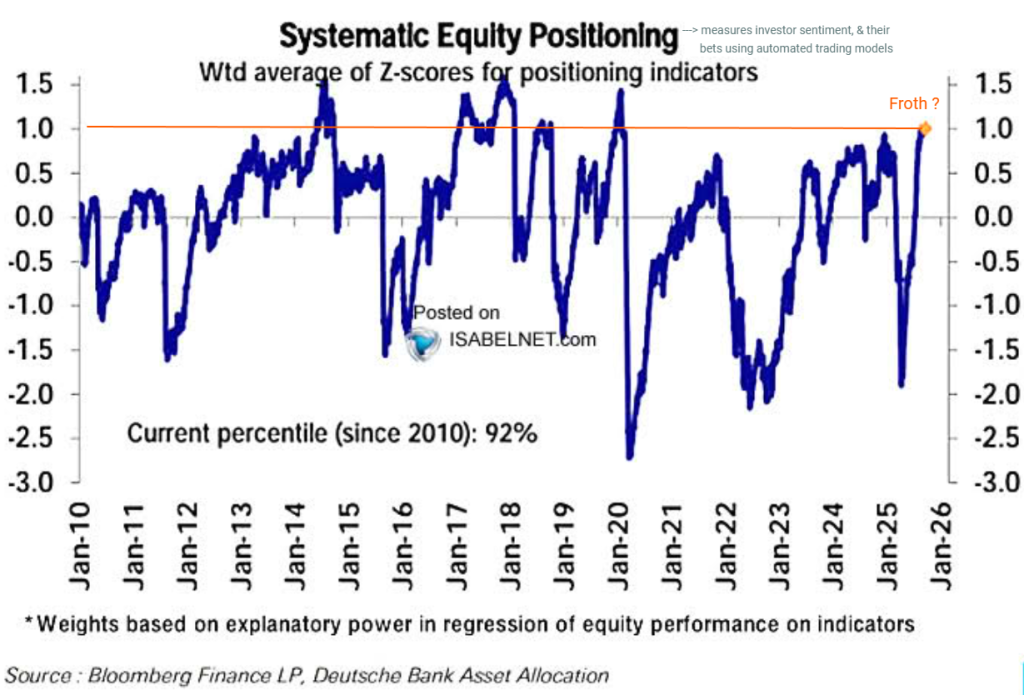
Since the 2008 mortgage crack-up, quantitative easing—the conjuring of dollars by decree—has become less a remedy than a ritual, like keeping the weakening economy alive with energy drinks instead of the neccessary surgery. Investors, consumers, and entrepreneurs having no alternative, have warily accepted the medicine while fretting over the profligacy of mounting liabilities and alarming debt-to-GDP ratios. Yet, amid their anxieties, they have reaped the benefits: unprecedented asset inflation, near-full employment, and wallets swollen with cash reserves.
From the trough of the Great Financial Crisis in 2008-2009, through the advent of QE’s limitless generosity, every level of American income earner has witnessed a beneficial decline in liabilities relative to assets. This fortuitous alignment, coupled with minuscule default rates, benign credit spreads, and corporate earnings ascending toward the sun, has fortified the financial foundation of households and enterprises. Even as Washington’s spendthrift habits summon visions of fiscal Armageddon, the private sector’s balance sheets gleam with robust health.

Consider the arithmetic of consumer affluence: Since the nadir of the 2009 global recession, household net worth (assets-liabilities) have burgeoned by a full 100 percent, eclipsing $111 trillion in aggregate growth. From the COVID abyss of early 2020, these net assets have outpaced even the federal debt’s vertiginous climb, swelling more than twice as swiftly as household borrowings. Net worth, a crucial ledger of solvency, has vaulted from $90 trillion at the pandemic’s depths five years ago to a commanding $148 trillion by mid-2025. The Biden administration’s record stimuli and the Federal Reserve’s indulgent lenience did ignite a major inflationary fire, with interest rates flickering upward in response. Today, the Biden period of monetary manna by the Fed has been replaced with a Central Bank contraction of monetary reserves back to the levels last witnessed in April of 2020.
Even amid the Federal Reserve’s parsimonious policies and the Trump administration’s tariff impositions, the American consumer’s fiscal fortitude endures with vigor. Debt ratios, balance sheets, and expenditures of businesses and consumers are unperturbed. The sole shadow on the individual ledger is the precipitous plunge in FICO scores among low-income members of Generation Z to 676 from 715. This cohort will feel higher insurance bills and borrowing costs for loans, which will not win over these voters for the mid-terms. However, this isolated tempest arises not from systemic economic frailties but from the abrupt repudiation of President Biden’s student-loan forgiveness fiat, supplanted by the Trump doctrine of fiscal accoutability. It is a rude awakening for these youthful adults who mistook diplomas for entitlements; but by removing the state from the compact among universities, lenders, and students, we restore the government to its role as referee instead of playing politics.
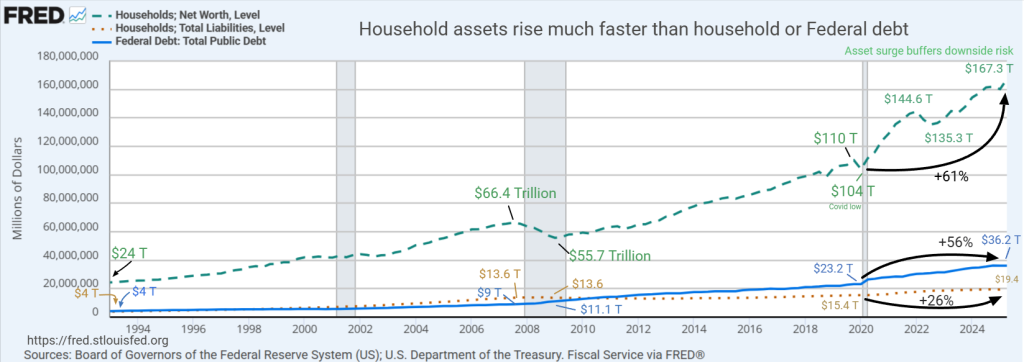
Though the burgeoning hoards of sidelined cash bear little direct relation to determining stock market trajectories, they demand attention, where risk-free bond yields, historically alluring, have propelled money market funds to swell at a near-trillion-dollar annual pace, reaching $7.7 trillion today. These reserves stand as a formidable safeguard against the recurrent investor panics that periodically unsettle the markets. The bulk of this wealth is likely to persist, if not expand annually; yet, in the event of an economic downturn marked by rising unemployment, this reservoir will likely serve as a wellspring from which investors drink to meet their needs and mitigate financial distress. Should a Trump administration miraculously ignite a supply-side boom during an expansion that also tames inflation, we might witness an historic reallocation of assets, as capital surges from the safety of cash into the dynamic potential of securities.
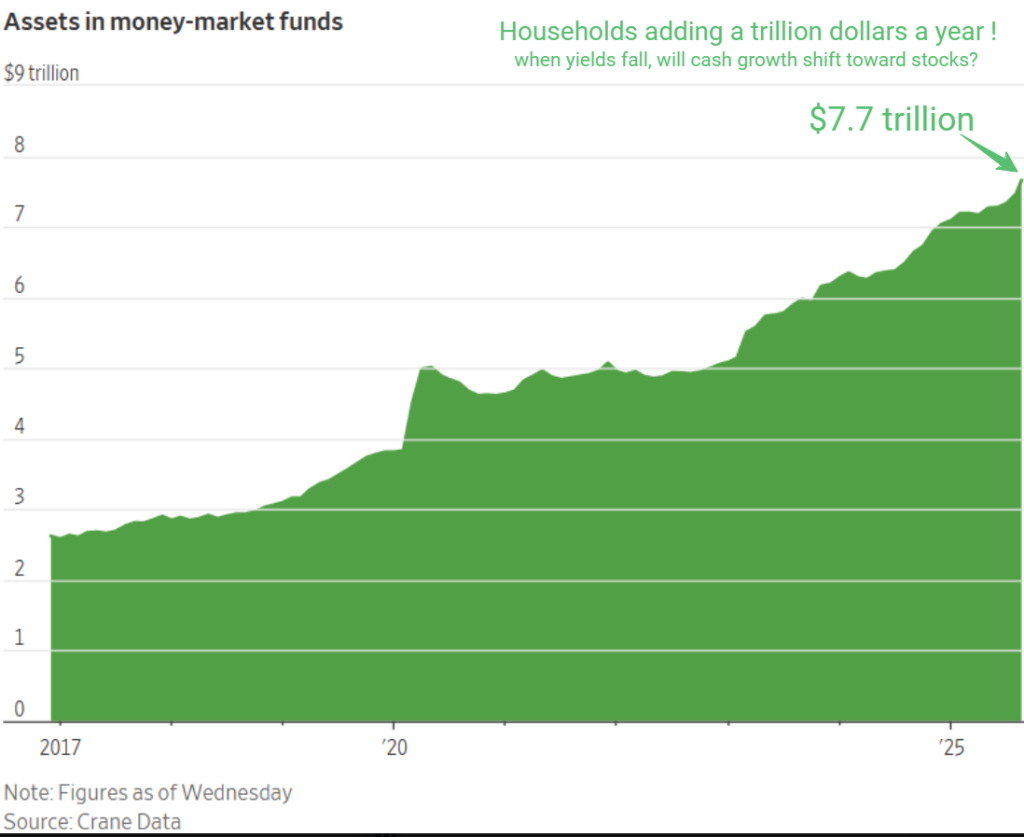
Investor attentions remain myopically riveted upon the technological vanguard and large capitalization stocks—propelled chiefly by the promethean expenditures on artificial intelligence. The indices for communications, technology, and consumer discretionary sectors dominate the landscape, each disproportionately weighted with the same cadre of hyperscale AI titans. Meanwhile, healthcare and consumer staples languish in the doldrums, untouched by the rising tide. Should we forge equitable trade pacts with China and Brazil, and should the Supreme Court preserve the essence of the Trump-era tariffs, then the bull market should broaden its charge, invigorated by a more all-inclusive earnings resurgence. As we have noted for months, we do worry about a serious short to medium term squall should SCOTUS rule against Trump emergency tariff power (IEEPA), as the constituion would appear to dictate. Until then, corrections are likely to be modest.
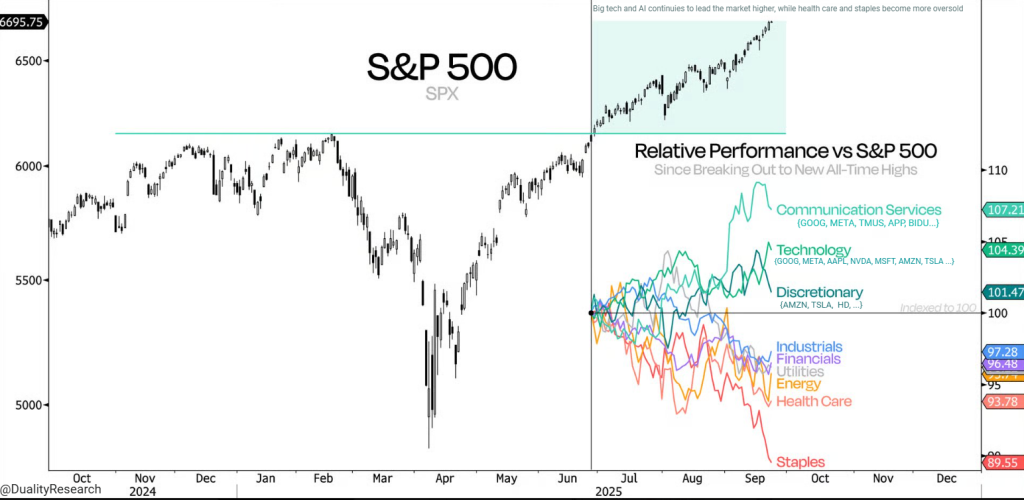
As we navigate the treacherous seasonal shoreline of stock market history amid stretched valuations, there looms the ancillary short-term risk of algorithmic fund flows, those automated models of systematic equity positioning. Current percentiles exceed the pinnacles of January-February this year when stocks peaked and approach the steep precipices just before the COVID deluge of early 2020. With the High Court likely to render its critical Trump tariff verdict in November, the confluence of seasonal turmoil, a looming Government shutdown, and inflated equity exposures increase the likelihood of volatility from our September 22nd inflection point that could persist into November. Thus, we counsel short-term caution in high beta or speculative stocks that have gone parabolic without earnings prospects. Yet, we continue to harbor long-term optimism, with a secular focus on AI’s ancillary realms: rare earths, cybersecurity, nuclear energy, data center edification and cooling, and, of course, semiconductors. Once trade policies with China and others crystallize, the wider economy may enlist with renewed clarity, unleashing pent-up capital in 2026 to propel the bull onward.