
The recent, almost parabolic ascent of gold has confounded conventional analysis. For too long, the price action of this storied metal has been assayed against familiar, if increasingly frayed, metrics: the immediate pressures of the Federal Reserve’s monetary policy or the immediate vigor of the U.S. Dollar. Yet, in recent quarters, Gold has demonstrated an unsettling independence, rising sharply even as the Dollar maintained its strength and inflationary anxieties abated.
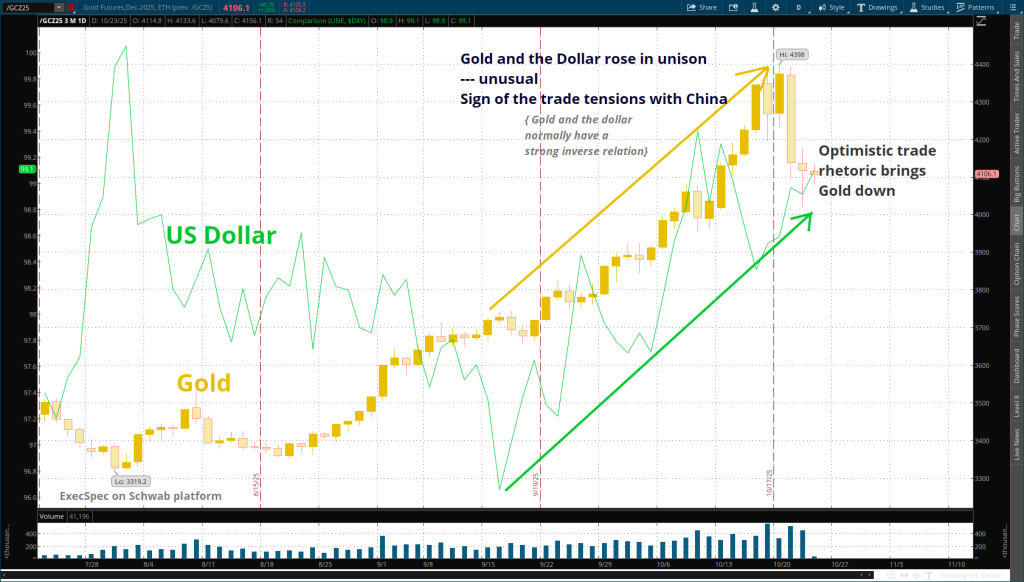
This decoupling is not a market anomaly; it is a geopolitical flag, signaling the irreversible degradation of the global architecture built in the wake of the Second World War. The story of gold’s valuation is no longer a simple economic chronicle; it is a political commentary on deglobalization.
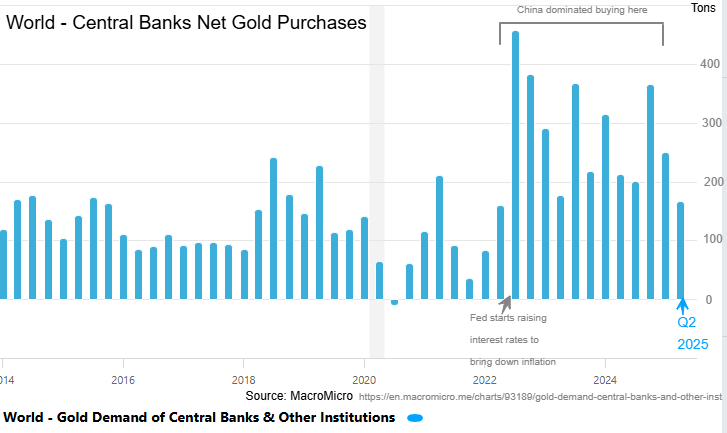
The missing link in the typical analyst’s calculus is the accelerated repatriation of supply chains and the subsequent scramble by central banks to diversify their reserves. China, which once seemed inextricably linked to the American financial ecosystem via its prodigious holding of U.S. Treasuries and need for exports, now acts as the bellwether of this shift. Beijing’s quiet divestiture of government debt and threats to choke critical supplies, paired with its aggressive accumulation of gold—an asset outside the direct jurisdictional reach of a potential adversary—confirms that the financial battlefield is being prepared. This accumulation, confirmed by consecutive record years of sovereign gold demand (1,037 tons in 2023, 1,045 tons in 2024), is not merely a hedge against inflation; it is statecraft using gold purchases to quietly de-dollarize its economy and reduce dependence on the US financial system.
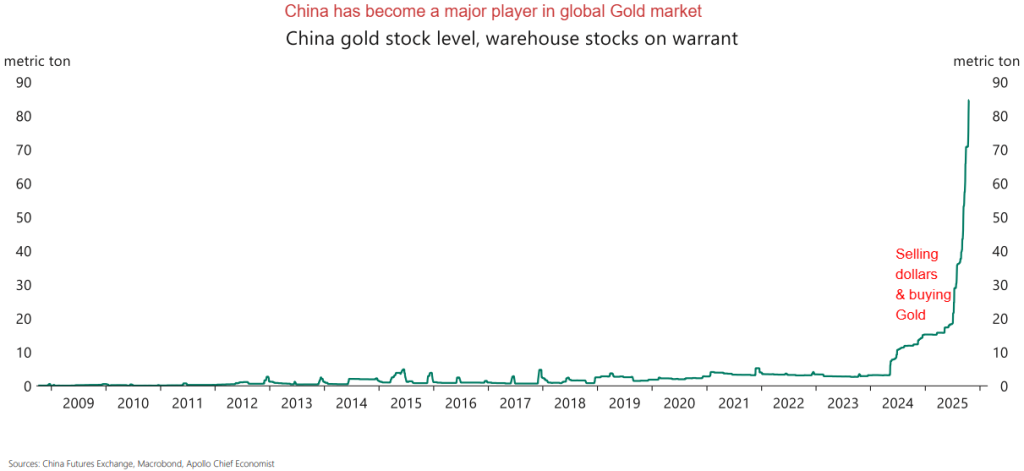
For decades, the Pax Americana—underwritten by American naval power and the promise of hyper-efficiency—enabled the hyper-globalization that led to China’s dominance over critical supply chains. The arrival of Trump’s tariff regime served as a political accelerant, pushing the inevitable over the cliff’s edge. Now, the de-globalization horse has truly left the barn. Every major economy is racing toward economic and military independence, establishing domestic-oriented supply chains in critical sectors, from AI and energy production to rare earth resources. The ambition is simple: to neutralize the adversary’s capacity for financial and supply-chain leverage regardless of cost.
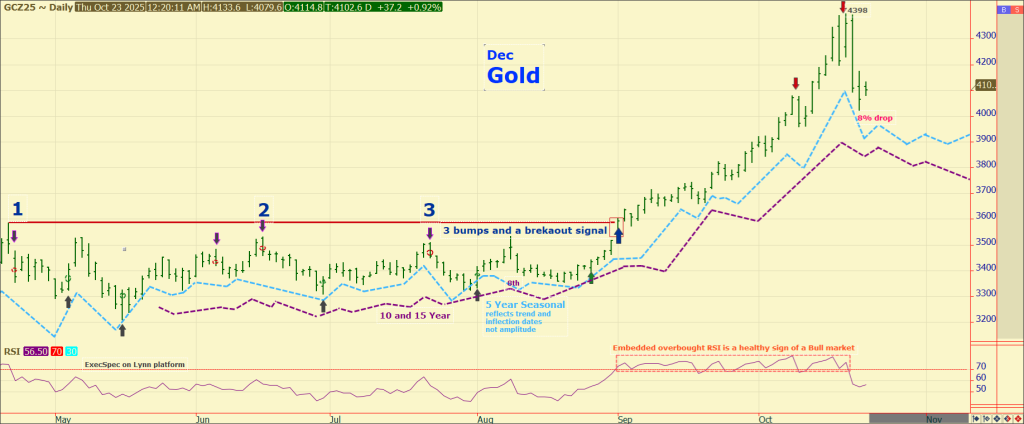
This structural rupture makes gold supremely vulnerable to political news shocks. The metal’s spectacular, if volatile, recent performance—rising over 100% in less than two years and over 60% this year before this week’s sudden, sharp 8% correction—cannot be dismissed with the herd of analyst’s tired, intellectually threadbare “profit-taking” bromide. A more rigorous interpretation suggests the decline was a direct response to a perceived détente—an easing of the protectionist impulse signaled by apparent shifts in U.S.-China tensions this week after a confrontational climax last week.
China also leads the trend toward selling down their massive holdings of US Treasury debt as they use their Dollar based assets to stimulate domestic consumption and buy gold.
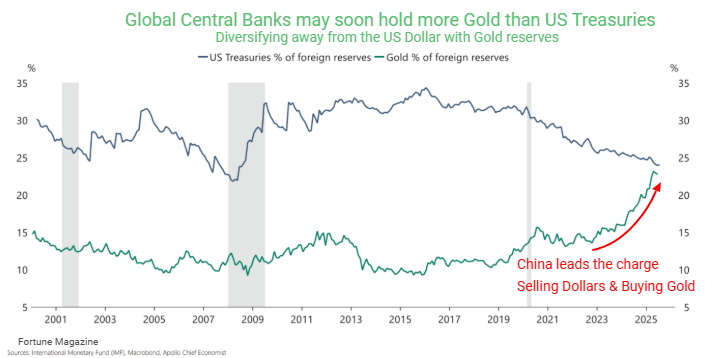
The current bullish consensus reaching 16 year extremes of optimsim—which, by the nature of markets, often serves as a counter-indicator—faces two existential risks in the coming weeks. Should the political machinery succeed in brokering a trade deal that temporarily re-opens critical supply chokepoints, or should a Supreme Court ruling curtail executive authority on tariffs, the rationale for the sovereign flight to gold would be diminished, potentially triggering a significant 20% correction. November may be pivitol for Gold as these tipping points are decided. The Gold market is thus less responsive to the Federal Reserve’s pronouncements or sentiment and more attuned to the shifting sands of global security. The pivotal investment decisions will be rooted not in technical charts, but in the political theater playing out between Washington and Beijing. Despite these increased risks for Gold Bugs in coming weeks, the secular trend will continue to favor countries reshoring their supply chains and adding Gold to their reserves.