In the complex dance of global economics, where national currencies pirouette to the rhythms of political ambition, we find ourselves witnessing a particularly intricate performance orchestrated by the Trump administration’s trade policy. What began as a triumphant march of American economic exceptionalism last October—with stock markets and the dollar ascending like a conquering army—has metamorphosed into a more nuanced narrative of uncertainty and strategic recalibration.
The initial euphoria surrounding a potential Trump restoration was built upon a foundation of conservative economic orthodoxy: deregulation, tax cuts, and the reshoring of industrial might. These sacred conservative principles have found themselves overshadowed by the looming specter of comprehensive tariff regimes and the potential for escalating trade confrontations.
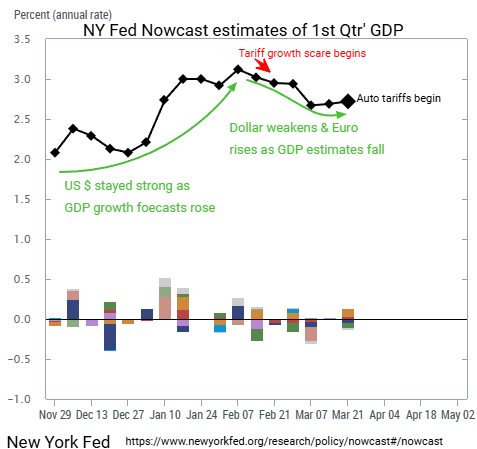
From October to January, the US dollar surged from two-year lows to two-year highs. Other nations, observing the American economic juggernaut with a mixture of admiration and trepidation, initiated their own stimulus programs—a defensive maneuver designed to prevent capital from flooding exclusively into American markets.
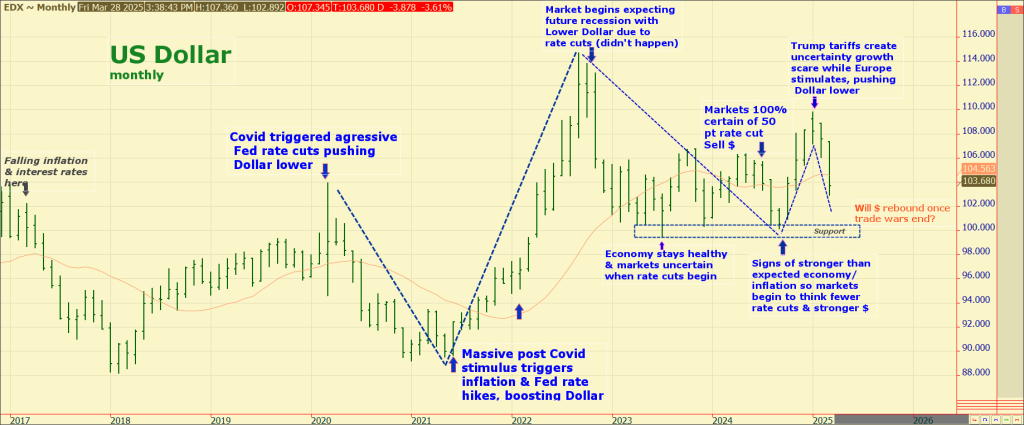
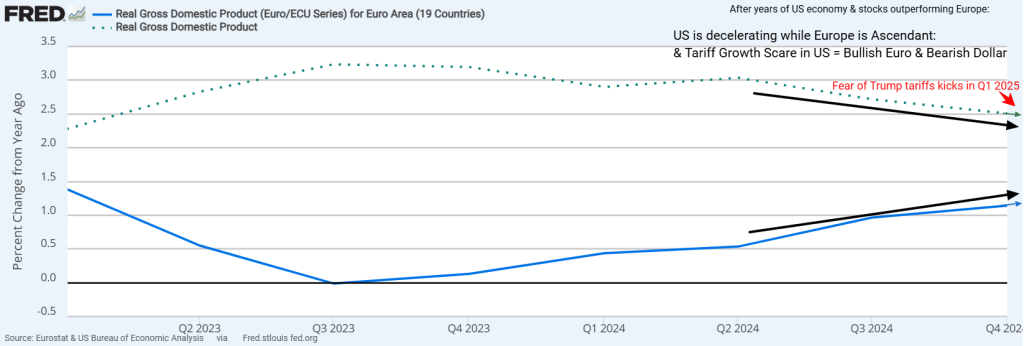
Enter the tariff regime—that blunt instrument of economic statecraft—which has prompted a collective pause among investors and corporate leadership. The result? A remarkable reversal of fortunes. The ascendant American markets have ceded ground, while European exchanges have emerged as the unexpected thoroughbreds of the economic race. The geopolitical backdrop adds additional complexity. Trump’s rhetorical threats regarding NATO support inadvertently catalyzed a European military spending program, further widening the performance gap between American and European markets. After two years of robust American outperformance, a reversion to the mean was perhaps inevitable, but the administration’s inability to provide economic stimulus has accelerated this transition.
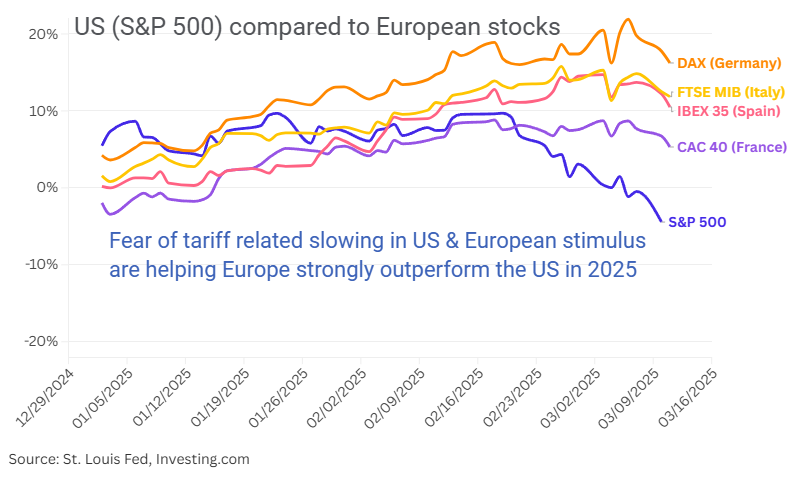
Unfortunately, Trump’s lack of stimulus and surprise willingness to ignore the barometers of a weaker economy and stocks in 2025, has triggered impatient investors and CEOs to hurry up and wait – slow their spending. First quarter GDP forecasts have been on the decline; thus, stock market earnings estimates have also joined the slide lower.
With the US GDP decelerating and the European economy ascending, it’s understandable that capital flows have shifted back across the pond chasing a more optimistic investment environment.
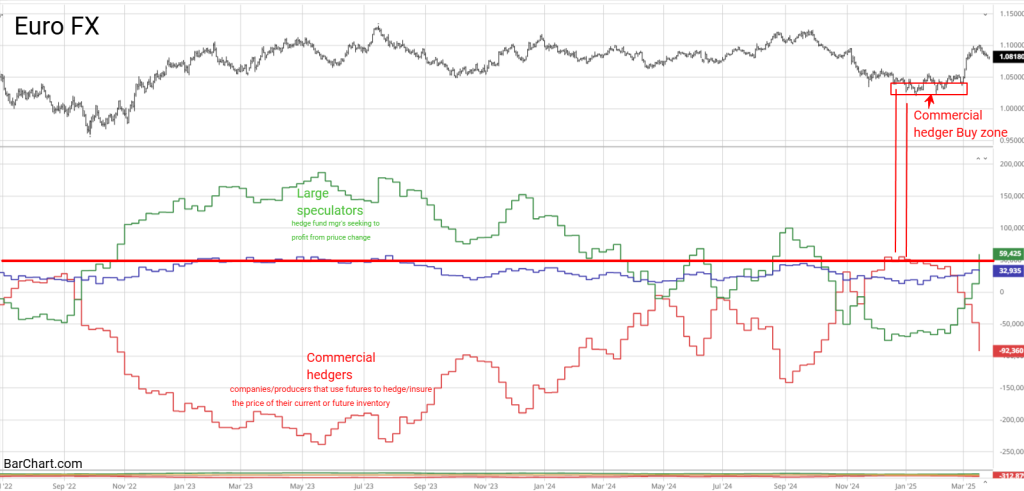
Currency markets have become the most sensitive barometer of these geopolitical and economic shifts. Sophisticated hedge funds and commercial traders have positioned themselves with the prescience of chess grandmasters, establishing extreme long positions in the Euro while simultaneously hedging oversold conditions in the dollar. The urge to buy the Euro has been partially unwound this past week, awaiting signs of trade policy calm or more calamity.
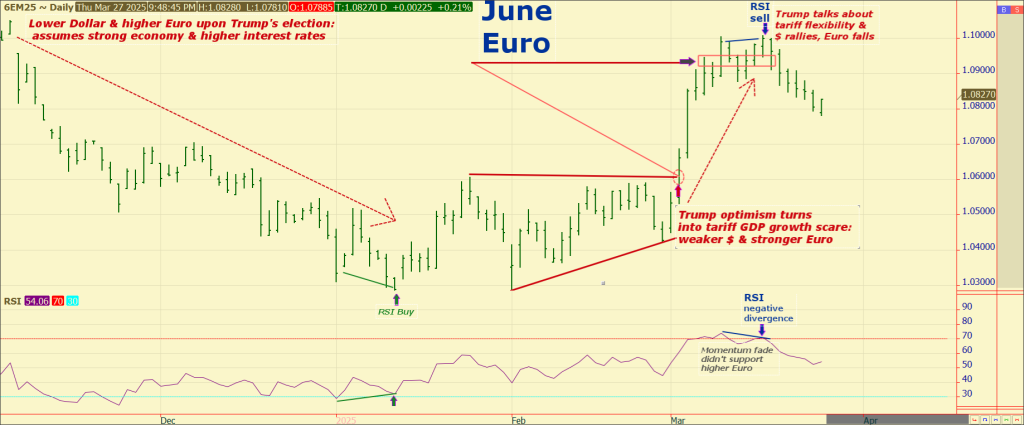
The mid-March Euro peak (and Dollar bottom) arrived just above our projected target level along with a Bearish Relative Strength (RSI) momentum divergence. With the confidence that Trump will increase the series of March tariffs on European imports April 2nd as well as the promised European retaliatory tariffs, currencies are waiting to see if a negotiated settlement begins immediately afterwards. The odds of a temporary calm should ensue, leading to a stock market rebound and some weakness in foreign currencies in the short term.
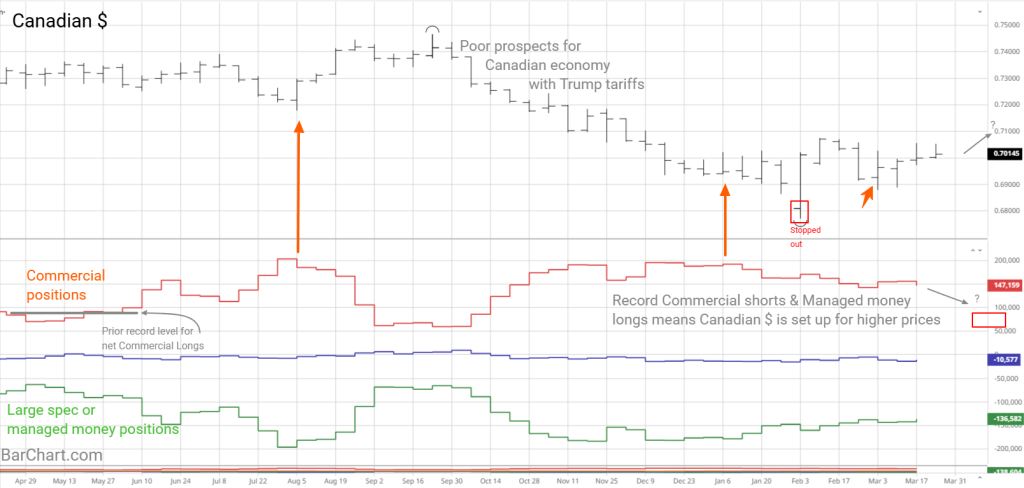
Some currencies need to rally further to offset the extreme hedger positioning. The Canadian dollar, with 77% of its exports destined for American markets, finds itself in a particularly delicate position. Hedge funds have slightly redcued their Bullish exposure, yet further gains are likley this year once the trade tiff with our disgruntled northern neighbors can reach a settlement.
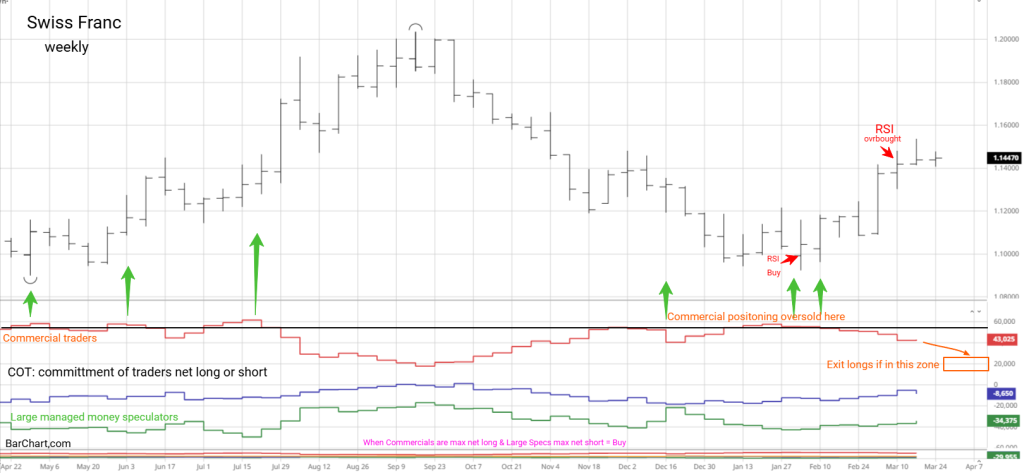
While the fiercely independent Swiss have seen their currency move with the Euro, the Commercial hedgers, that lock in curency values for their products, have considerable room to unwind their net long futures contract positions. If the trade war ceases escalation in April, the Swiss Franc has ample room to appreciate further.
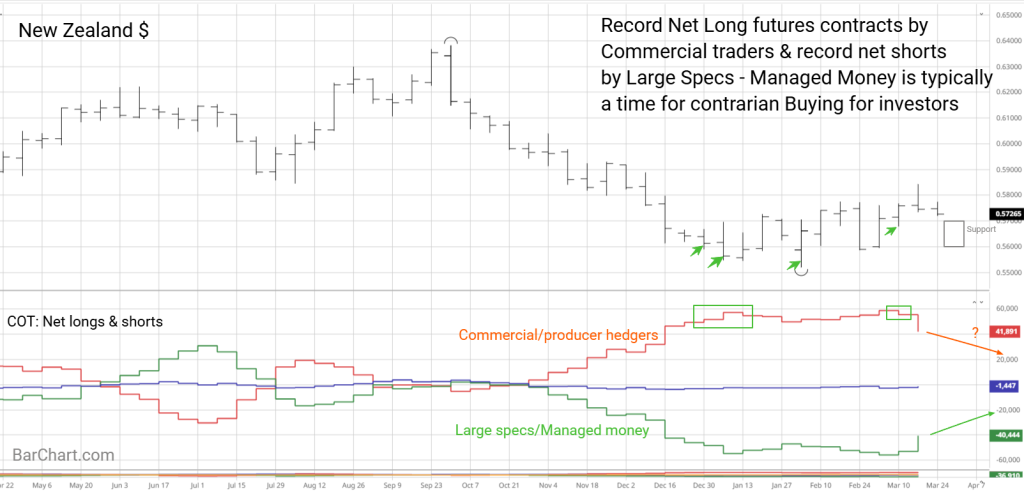
The Swiss franc moves in sympathetic resonance with the Euro, while the New Zealand dollar—that distant sentinel of the Pacific economic rim—awaits global tension’s potential dissipation. Back on January 15th we wrote: “Hedge Funds net short positions in the Kiwi are collapsing to historic oversold levels. Investors awaiting reversion should be rewarded in buying these currencies upon new lows before the end of March.”
The economic prospects for Kiwis of New Zealand are tethered to tourism and the global economy. Should global tensions ease and recession fear fade, then the Kiwi currency will rebound further. The unwinding of extreme managed money shorts and commercial hedger longs should keep the NZ Dollar as a dip buyers’ market.
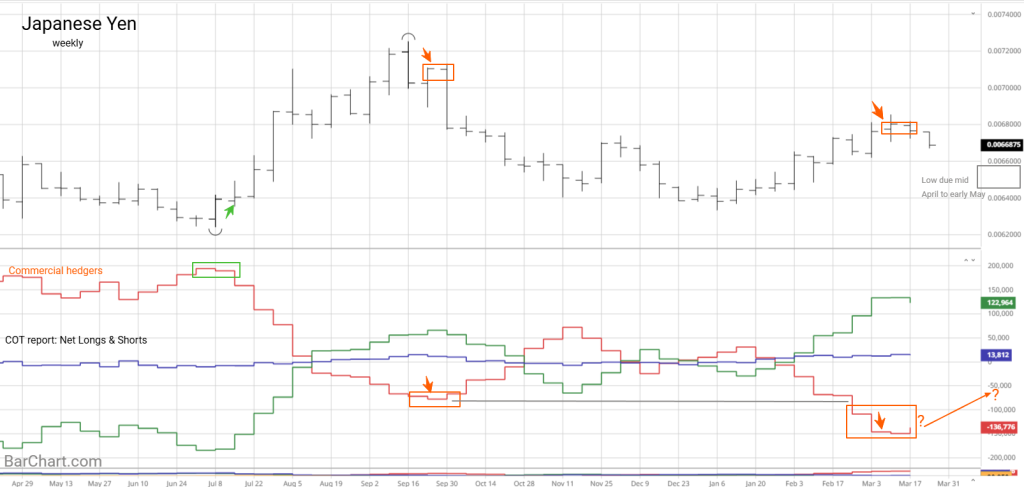
Japan presents a fascinating case study in currency manipulation, its monetary policy long designed to ensure export competitiveness. On the cusp of potential steel, automotive, and general tariffs, Japanese financial strategists have positioned themselves to potentially devalue the yen, a move that speaks to the ongoing fragmentation of the post-World War II global economic order. With considerable room to unwind these record hedges, there will be an impetus for the Yen to devalue further to help their exports compete in this new world of deglobalization.
President Trump understands the narrow window of political opportunity. Consumer pain must be strategically managed, calibrated to achieve long-term structural changes before potential political abandonment occurs in the 2026 midterm elections. The current tariff confrontation remains primarily reflected in soft economic data, while hard consumer behavior maintains a surprising buoyancy.
The base case remains that the administration will risk significant short-term economic and diplomatic capital with the expectation of long-term structural reforms. Yet the clock ticks inexorably, and the margin for strategic economic restructuring grows increasingly narrow.
As always, the market shall render its verdict with all the finality of a Supreme Court decision, though perhaps with considerably less accompanying prose.