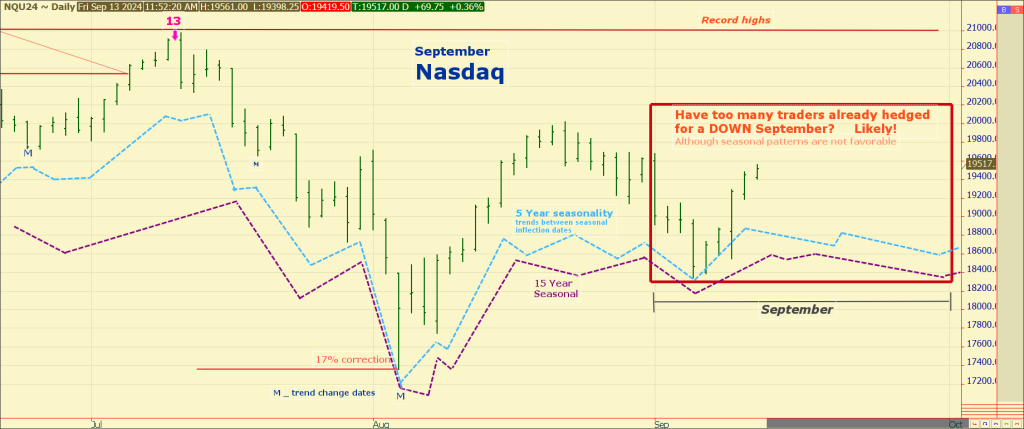
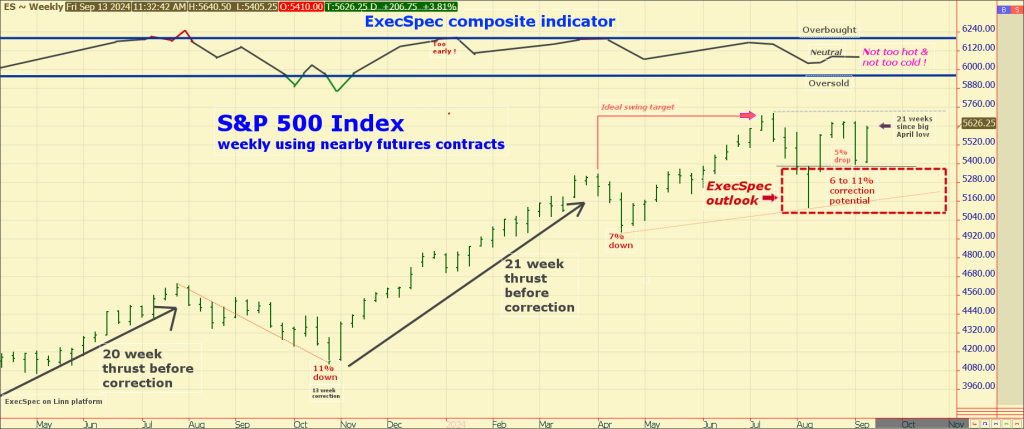
Investors and forecasters often fall prey to the twin dangers of alarmism and overzealous anticipation of monetary policy shifts. The Federal Reserve’s communications have been nothing if not transparent and decidedly hawkish during the past two years, consistently signaling higher interest rates ahead. Yet, against this backdrop, many market managers clung to calls for cuts, reflecting a resolute disconnect between rhetoric and reality.
In recent weeks, the Fed has shifted its stance, adopting a palpably dovish tone that has ignited predictions of swift and substantial rate cuts in the near term. The prevailing consensus now anticipates at least three quarter-point reductions in the federal funds rate over the next three months, with some even speculating on as many as five. This prevailing logic rests on a belief that as inflation and employment continue their descent, the Fed must proactively engineer rate cuts to stave off recession.
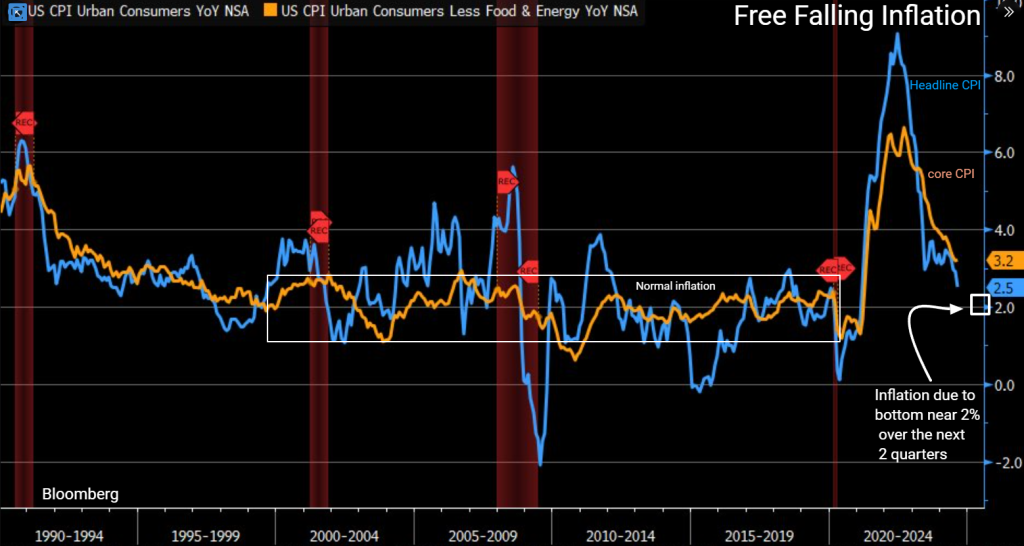
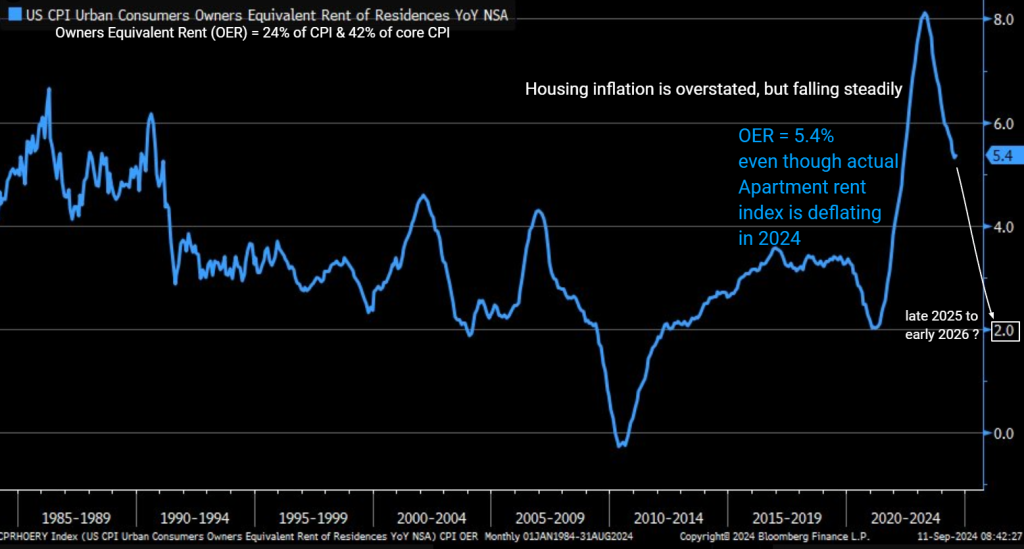
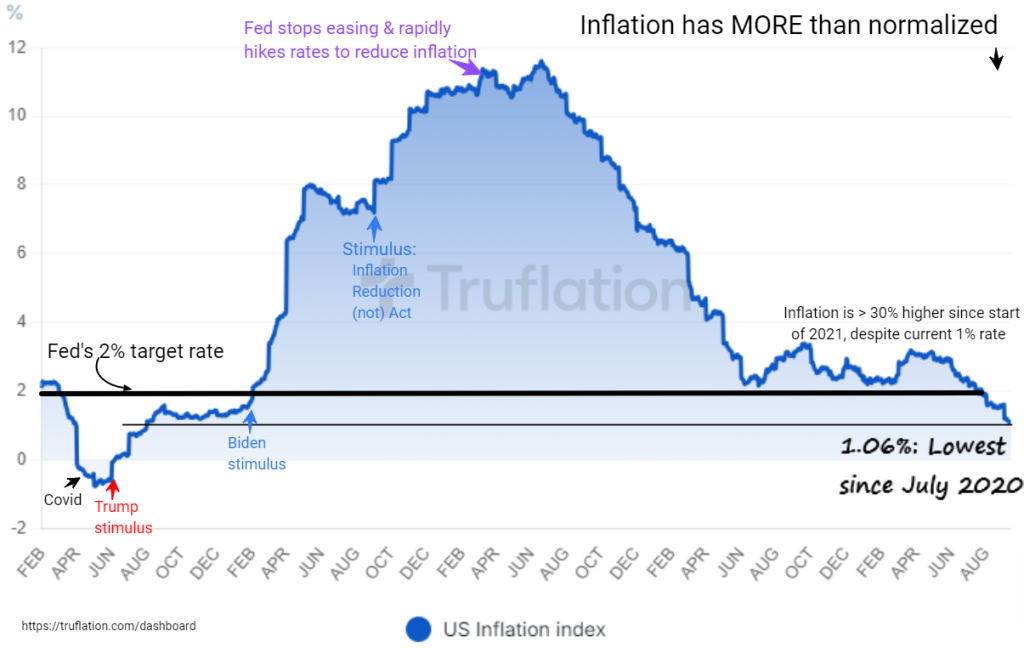
Inflation appears to be normalizing, with the headline Consumer Price Index (CPI) falling to an annualized 2.5% in August. Yet this figure is clouded by the persistent and often misleading influence of Owners Equivalent Rent (OER), a metric that constitutes a staggering 42% of the inflation index. Currently, OER has receded to a 5.4% growth rate and apartment rents market are deflating. Many analysts point to the OER as an obstacle preventing inflation from dipping below the Fed’s target of 2%. We expect this overstated inflation measure of rent (OER) will keep falling steadily for another year, which will help dampen inflation into 2026.
Investors who anticipated Fed rate cutting over the past year have driven the 10-year yield from 5% to about 3.6% today. This can easily be justified when viewing Truflation’s algorithyms that have fallen to just 1%, well below the Fed’s 2% target rate. Although consumers and small business surveys still reflect displeasure for the roughly 30% cumulative inflation over the past 3 and a half years, inflation is clearly low enough today for multiple interest rate cuts, even if recession is not a risk.
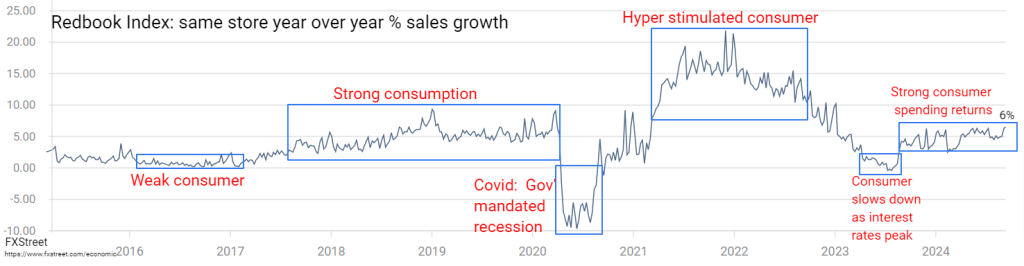
Despite the extreme cumulative inflation, many consumers are beginning to see the light at the end of the tunnel. While the overstimulated, hyper-indebted consumer is often portrayed as beleaguered, evidence on the ground tells a different story. Indicators from Redbook’s Same Store Sales, as well as robust performances from retail giants like Walmart and Amazon, reveal a surprisingly resilient consumer landscape. Restoration Hardware’s recent report of strong and growing demand further underscores this newfound vitality. Indeed, Bank of America has indicated that it sees little cause for concern regarding customer credit risk, with banks easing their lending standards while mortgage rates have plummeted from 6.5% to 5.3%. With a steeply inverted yield curve compared to the lofty 5.25% Fed Funds Rate and the 2 Year Treasury bond at 3.5%, there is at least 200 basis points of Fed rate cuts ahead, as long as inflation continues to trend toward 2% as we expect.
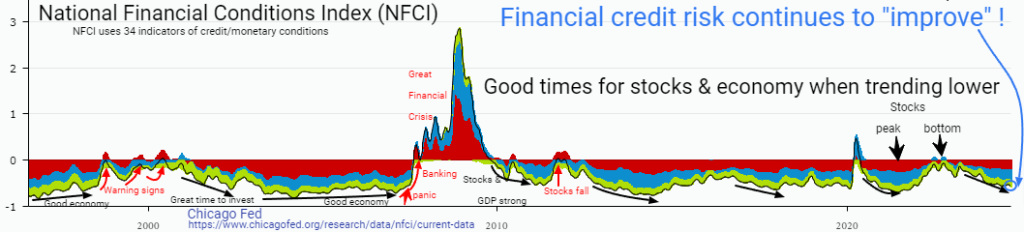
This unique juncture defies the widespread expectation of impending economic doom. Credit spreads remain insulated, and the National Financial Conditions Index (NFCI) indicates stability, trending favorably without alarming signs of default risk. We find ourselves in a paradoxical situation: at a moment when monetary policy appears on the brink of transition from tightening to a more stimulative posture, inflation rates are normal, labor markets are healthy, and corporate earnings are robust—reinforcing the notion that these dynamics do not herald an imminent recession. With 8 meetings a year, Quarter point rate cuts at almost every Federal Open Market Committee gathering for the next year is a rational expectation.
In this context, while technical indicators for equity investments may suggest inaction, investors would do well to regard market corrections as strategic opportunities rather than signs of impending peril. Allocating further investments into both stocks and bonds may be the prudent path forward, as we navigate through this intriguing chapter of economic evolution.