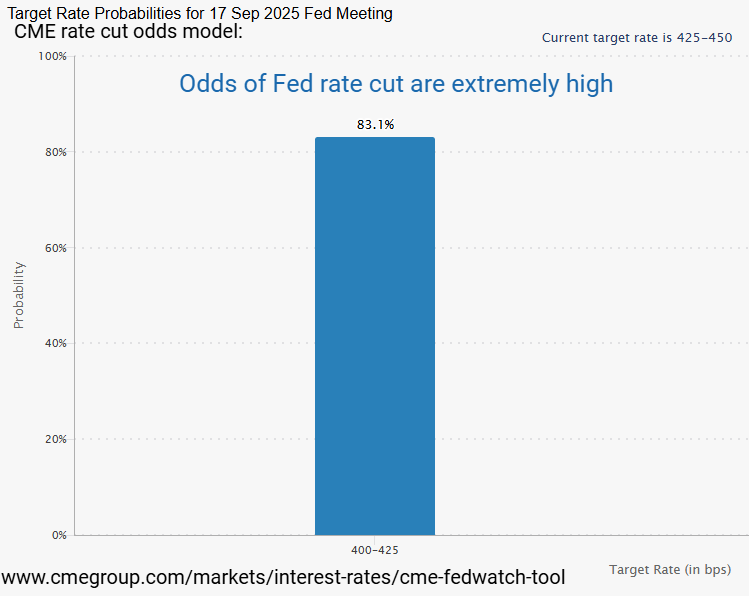
In the great American pastime of deciphering economic signals, policymakers and investors often navigate a fog of uncertainty. On August 22, 2025, Federal Reserve Chair Powell pierced that haze with clarity: “A downward adjustment in the Fed’s benchmark rate may be warranted,”, sending stocks soaring with the Dow leaping over 846 points. Jerome Powell’s remarks decoded, signaled that, barring unexpected inflationary surges before mid-September, the Federal Open Market Committee will trim the federal funds rate by a quarter point, ushering in the long-anticipated era of monetary easing that Trump has been demanding. This pronouncement has galvanized markets, igniting optimism despite the persistent ambiguity of conflicting economic data.
The backdrop to Powell’s pledge is the lower revision in job growth and tempered July Consumer Price Index (CPI) report, which revealed core inflation rising year-over-year to 3.1 percent. A modest uptick, but one rooted not in the tariff-laden trade but in the domestically anchored services. Owners’ equivalent rent, the perennial driver of housing costs, accounted for much of the increase, reflecting a market still relatively frozen due to high mortgage rates – that is, rate cuts and lower mortgage costs may add supply and lower home prices. Airfare, buoyed by resurgent travel demand, and healthcare costs, further nudged the index higher. These non-tariff pressures, while persistent, lack the geopolitical volatility of imported goods, allowing investors to greet the data with less trepidation over tariff related rate hikes. The prospect of Federal Reserve rate cuts, now a near-certainty for September, has utterly dispelled fears of recession, replacing them with a bullish fervor that sees monetary policy as a catalyst for sustained expansion while the economy cools near term.
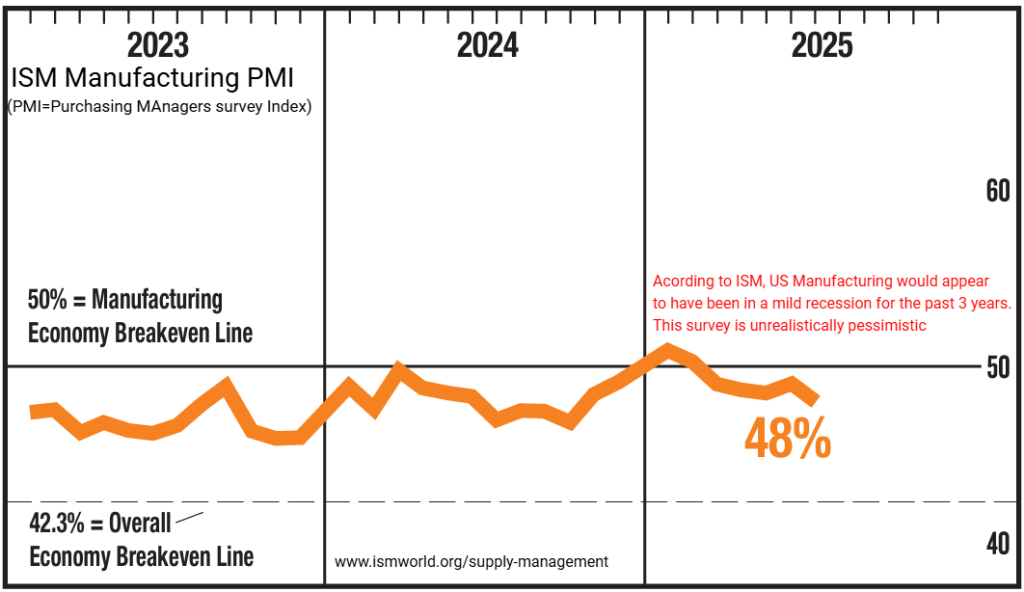
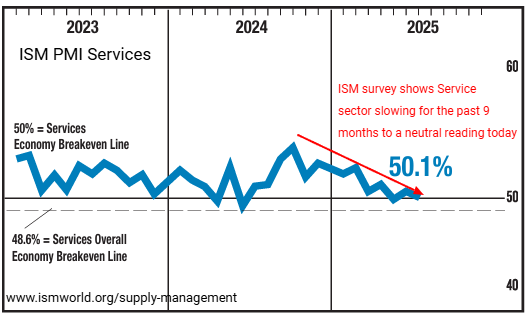
Yet, the economic landscape remains a study in contradictions, exacerbated by the government’s faltering grasp of its own data. The Bureau of Labor Statistics (BLS), has once again underscored the perils of premature pronouncements and damaged its own credibility. Late in 2024, sweeping revisions slashed reported labor growth by hundreds of thousands, and the pattern persists: July’s report added a mere 73,000 jobs, with May and June figures revised downward by a staggering 258,000, leaving a three-month average of just 35,000 new positions. Such serial corrections confound the Federal Reserve’s dual mandate of stable prices and maximum employment, rendering rate calibration akin to flying a kite in a hurricane. Compounding this, dueling Purchasing Managers’ Indices (PMIs) paint divergent portraits: the Institute for Supply Management’s multinational bias signals manufacturing contraction at 48, while S&P Global’s domestic lens reports robust expansion at 53.3 (above 50=expansion). These discrepancies underscore the need for clearer data. Trump’s new appointment to the BLS had better come up with a new and improved methodology – albeit a low bar – to justify his impulse to fire the messenger. From the Presidnet’s perch, the Fed might have cut rates sooner had they known at the prior FOMC meeting that the labor data was much weaker than reported at the time.
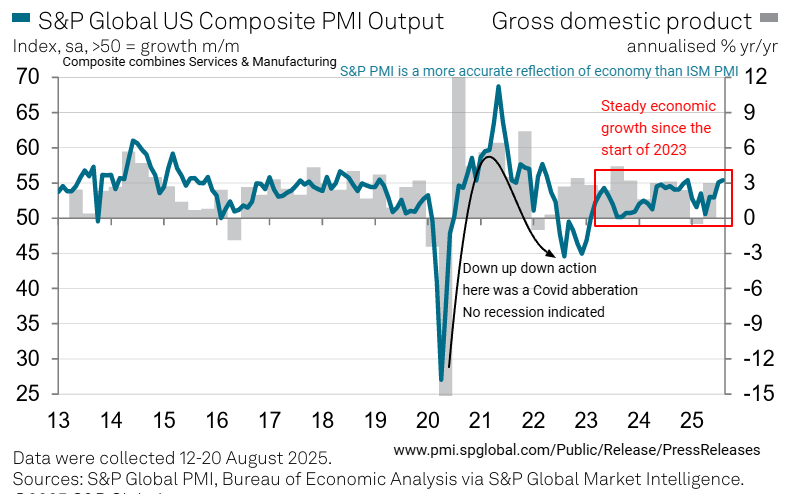
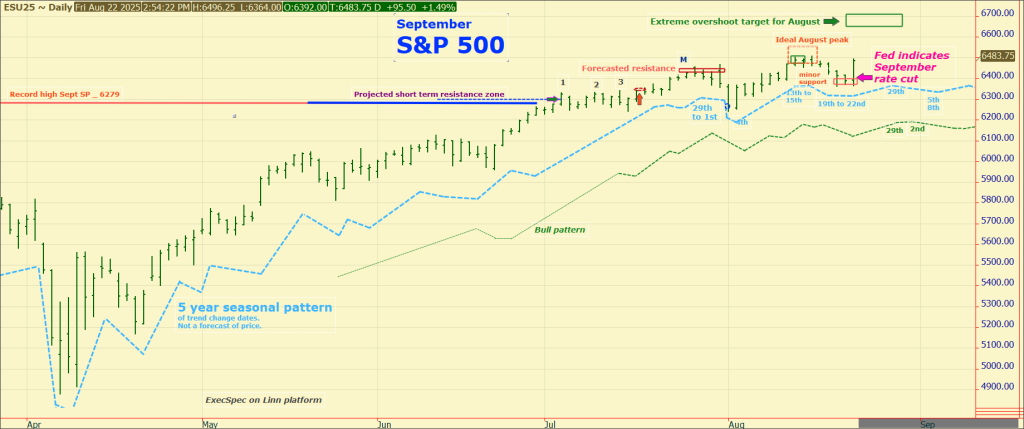
The fallibility of economic forecasting further muddies the waters. As a recent Forbes analysis astutely noted, “forecasting models… function less as predictions of the future than as belated confirmations of what we already know.” Last spring’s consensus, which foresaw recession, now lies in tatters, a testament to the models’ frailty. Unemployment lingers at 4.2%, with a lofty 7 million job openings per JOLTS data, yet skilled workers remain scarce—a market mismatch defying easy resolution. Despite these inconsistencies, the economy is growing, propelled by robust consumer spending and corporate earnings that have shattered records in 2025. Goldman Sachs reports that “60% of S&P 500 companies in Q2 beat earnings forecasts by over a standard deviation, a feat unmatched in 25 years outside the 2009 recovery and COVID reopening.” This vigor, particularly in AI-driven sectors, has propelled the S&P 500 to a peak near 6480, with today’s market pop on the cusp of yet another new record.
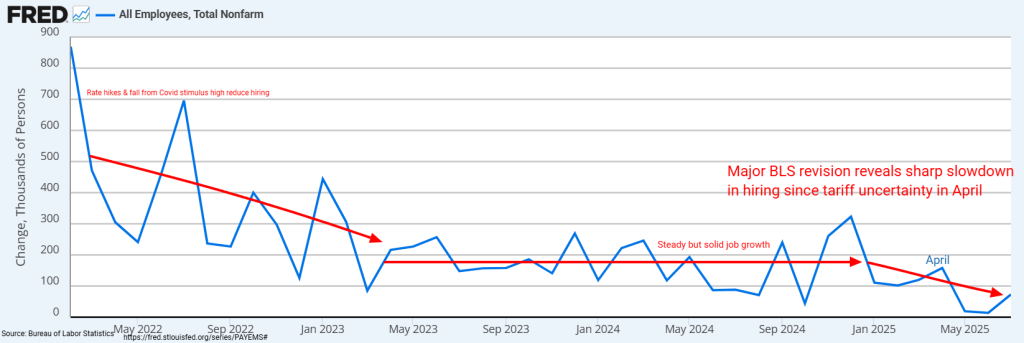
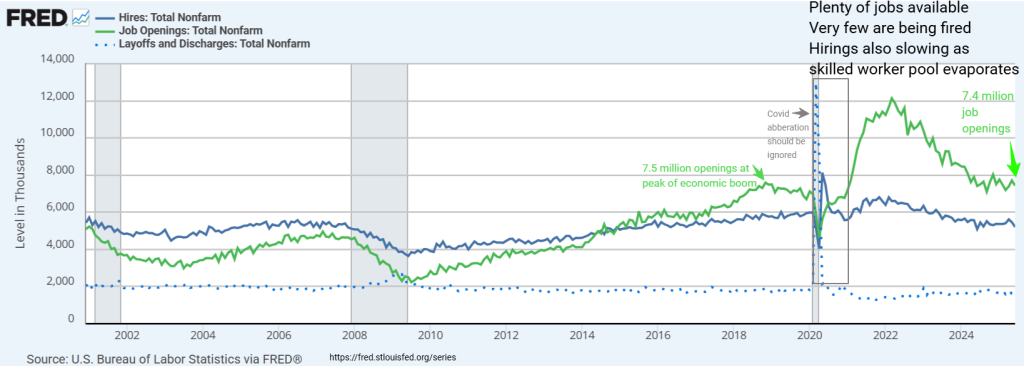
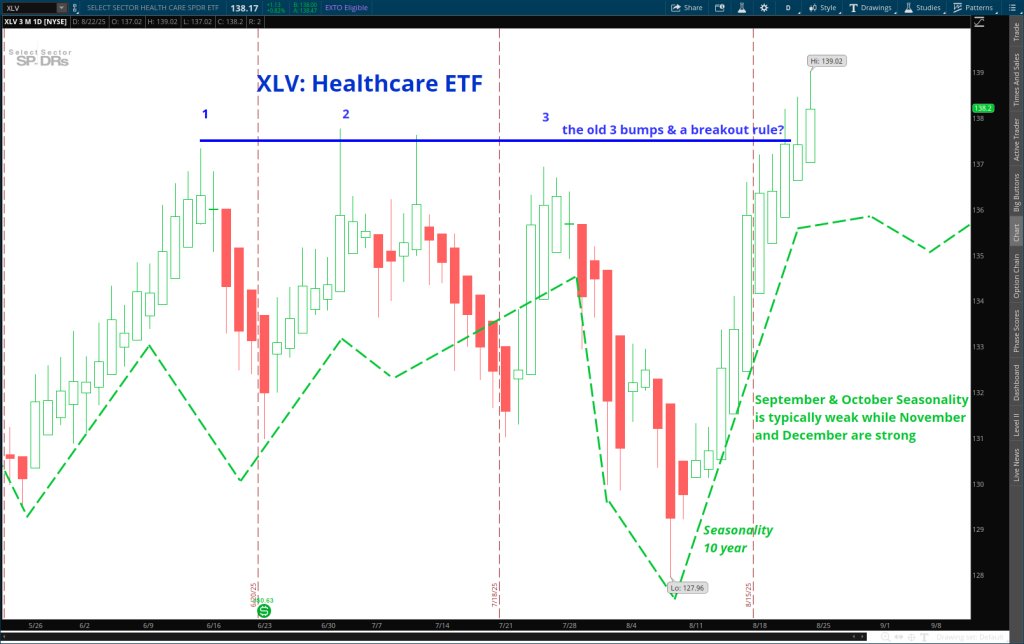
Powell’s signal of a September rate cut, absent inflationary surprises, aligns with this resilient backdrop. At least modest tariff-related price hikes loom, and trade deals remain unresolved, particularly China and India, yet investors now view these as navigable hurdles. Monetary stimulus, soon to be augmented by impressive fiscal measures, will converge with trillions in private and sovereign investments in U.S. production, promising a robust post-trade battle rebound in 2026. We remain resolutely bullish, viewing any correction potentially to the S&P’s 50-day or 200-day moving averages—as a healthy entry points in the seasonally weak September – October timeframe. Any pullback beyond this will likely be triggered by the uncertainty surge when Federal courts rule against Trump’s use of tariff authority. For traders, we would note that, other than such a court ruling against Trump tariff powers, stocks should remain well supported over the next 25 days until the FOMC rate cut decison day. While our focus on large-cap AI technology, cyber-security, rare earths, nuclear, data centers, and crypto all remain entrenched, AI’s broadening applications and rate cuts are poised to drive growth in the broader market into 2026 relative to prior leadership.
The breakouts and out performance in healthcare and small cap indices in August are important shifts in investor psychology that we will add to the model portfolio. The government’s data woes, ripe for private-sector innovation, only underscore the market’s capacity to thrive amid uncertainty.