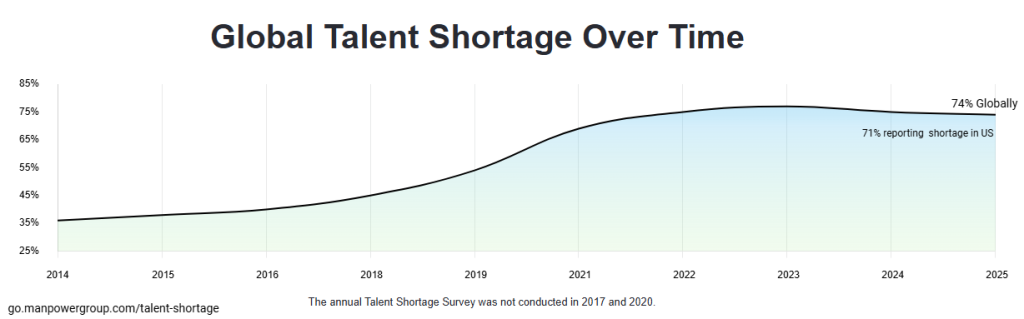
Defying the doubters, tariff inflation and labor contraction have yet to arrive, trade deals are being done and the Big Beautiful Bill miraculously passed. In a political and economic landscape littered with the debris of dire predictions, Donald Trump’s economic agenda has at times appeared to resemble a drunken driver on a race track bouncing between guard rails. The President has deftly sidestepped skeptics with a flourish of fiscal finesse. His budget-busting bill, passed with a razor-thin majority and ahead of schedule, stands as a testament to his unrelenting energy and determination to push his agenda with a war-like footing. The naysayers, who voiced their visions of recessionary ruin in April, now watch as the economy hums a tune of resilience, with nuclear power, AI data centers, chip production, and blockchain innovations attracting a cascade of capital. The economy is transforming and new industries are rising up. Not to be left out are driverless cars, flying cars, robots and stablecoin adoption that will attract a new wave of capital for years to come. Investors, peering past ephemeral economic eddies, fix their gaze on a horizon shimmering with promise for 2026 and beyond. The most serious economic concerns are shifting away from trade wars and inflation, toward the capacity constriants of adding skilled workers and building out the energy grid rapidly enough to meet demand.
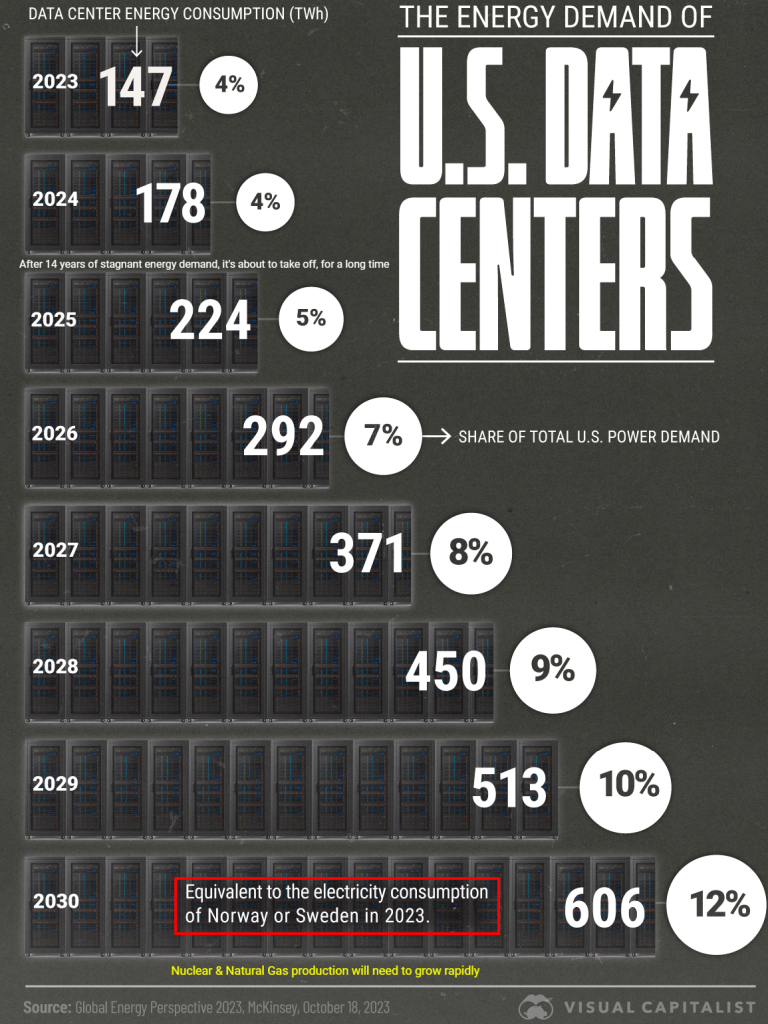
The labor market, a barometer of economic vitality and the ultimate arbiter of recessions, has delivered a dazzling display of durability. October’s jobs report, adding 147,000 jobs—well above the anticipated 110,000—marked the fourth consecutive month of exceeding expectations. The unemployment rate, which dipped to 4.1%, its lowest since February, has silenced the chorus of economists who foresaw stagflation. The available skilled labor pool is drying up, yet this steady stride of additonal jobs, is echoed by a buoyant stock market, revealing a market less swayed by transient tremors and more attuned to the tempo of long-term growth propsects. Even a weaker jobs report, paradoxically, might have spurred stocks skyward, as investors would anticipate Federal Reserve Chair Powell’s pivot to stimulative rate cuts—a classic Bull market case of finding silver linings in storm clouds.
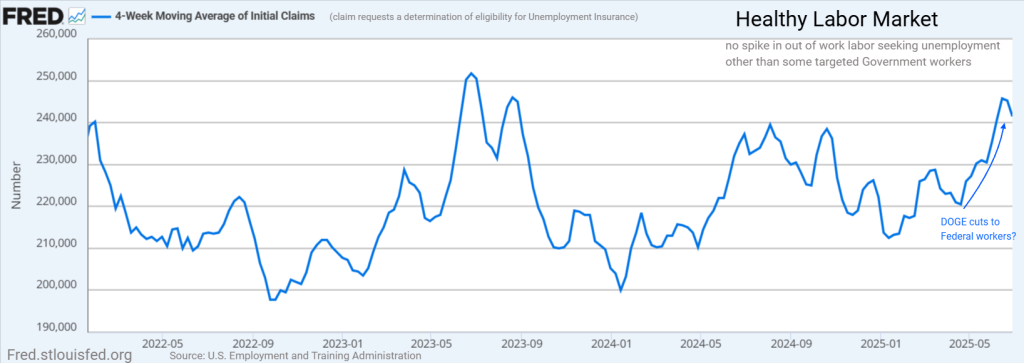
Gross Domestic Product has sustained its steady stride. The Atlanta Fed’s current estimate of 2.6% growth for the second quarter, amidst a fog of data uncertainty and corporate caution, underscores an economy that refuses to falter. Trump’s trade tactics—marked by high-stakes deadlines and bullying tariff threats—have woven a tapestry of unexpected triumphs. A trade deal with Vietnam, struck just before a July 9 deadline, slashed proposed tariffs from 46% to 20% while targeting Chinese transshipment with a 40% levy. In return, Vietnam opened its markets to American goods, a coup that echoes similar frameworks with the UK and China. Rumors are that a trade deal with India and Switzerland are in the offing next week. These deals, far from isolating the U.S. as many had previously worried, have pressured nations like Indonesia, Thailand to realign their economic allegiances, defying forecasts of diplomatic deadlock. Should the momentum continue to build, our European, Australian and even Canadian allies will feel the giant sucking sound of the US economy and bow to Trump’s bluster.
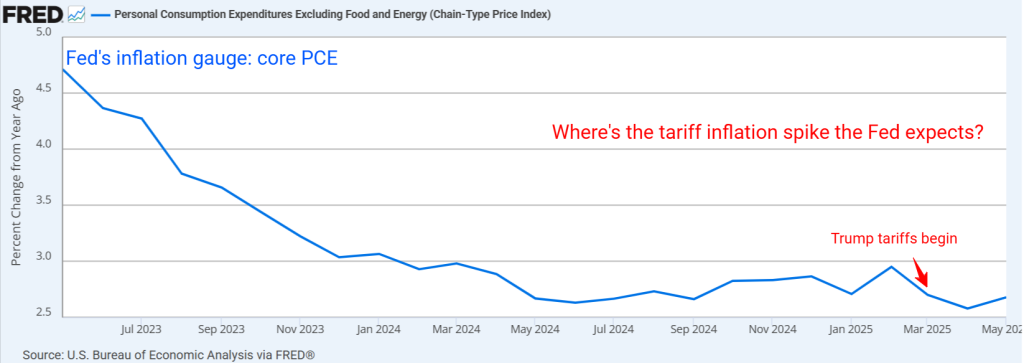
Critics, from prominent Democrats to many cautious Republicans, once warned that Trump’s tariff-heavy tactics would trigger a tempest of economic turmoil. Yet, inflation and interest rates have remained remarkably restrained. Wall Street analysts and major banks had forecast core goods inflation as high as 6.3% for 2025, and consumer sentiment surveys expected price increases of over 5%. Consumer prices rose a mere 2.4% over the past year, just above April’s 2.3%, the lowest since early 2021. This stability, even as the effective U.S. tariff rate soared from 2.3% to 14.1%, has left analysts score sheets in disarray. Relative to the spread bewteen inflation and interest rates in other Western countries, our Fed should be cutting rates by at least a full percentage point in coming months, assuming the Gadot tariff inflation never arrives.
The stock market, a mercurial mirror of sentiment, has adroitly traced Trump’s trade triumphs and legislative leaps. After Trump’s tariff terror-induced 20% tumble into April 2025, the administration’s strategic pause on further tariff increases sparked the quickest rally from a 15% or greater decline to record highs in history. It wasn’t just a spiritied run, it was possessed, climbing the proverbial wall of worry, shrugging off earlier stumbles and mocking murmurs of market malaise. This ascent, despite modest investor enthusiasm and trade deal uncertainty, reflects a pattern of economic endurance and earnings that has repeatedly rebuffed expert skepticism. Our theme of a Bullish rebound throughout the 2nd quarter has been vindiated with gains beyond our Bullish prognostications.
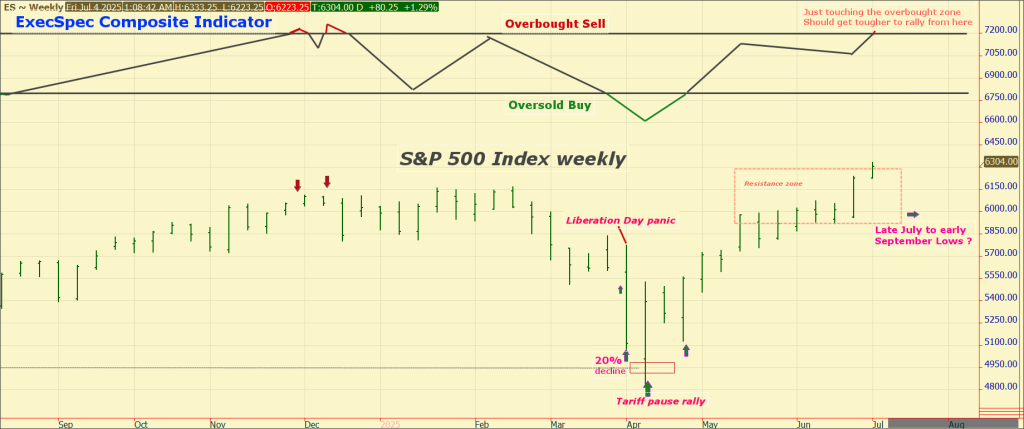
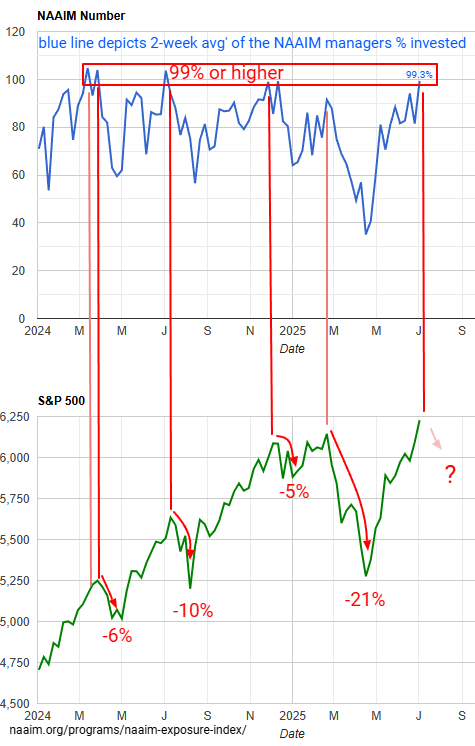
Yet, a note of caution creeps into this chorus of confidence. Money managers, emboldened by bullish bets, have pushed leveraged equity portfolio exposure to perilous peaks above 99%, touching the overbought zone where corrections often lurk. Historical patterns suggest a 5%+ dip in the S&P 500 may loom by late July or early August—a mere hiccup in this bull market’s healthy heartbeat. The quantum computing and SMR nuclear related meme stocks, that are doubling and tripling in value this past quarter with no earnings prospects this decade, will need to pull over so the pit crews can refuel and change the tires. Savvy investors, their digital pencils poised, should watch for a fleeting falter, as fiscal stimulus and reshoring promises to fan economic and stock market flames more broadly next year. In Trump’s America, where consensus is continually confounded, the economy and markets march to the beat of daring doubters to keep pace with its unpredictable but positive pulse.