
During Trump’s first term we expected he would ring fence Iran, forcing a military engagement, knowing Iranian leaders would never submit to an enforceable nuclear agreement.A devastating Oil embargo against Tehran was the outcome, but he ran out of time to tighten the noose around Iran’s malicious ambitions before the Biden administration replaced him. In Trump 2.0, after 4 years of further Iranian attacks by its proxies in Yemen, Gaza and Lebanon, he was determined to force an ultimatum that eliminated Iranian nuclear weapons development and defanged Iranian military threats. The former Persian power has made it clear through several rounds of negotiations this year that they have no intention of submitting to any material demands by the US to curtail their nuclear ambitions or threats to extinguish Israel. By any historical measure, the Middle East is no stranger to conflict, but even the region’s tragic familiarity with strife has not dulled the impact of the events that unfolded on June 12th. In a striking military operation, Israel launched a coordinated strike targeting high-ranking Iranian military officials and critical components of Iran’s nuclear and ballistic weapons infrastructure. The operation, surgical in its precision but strategic in its implications, has ushered the region into a new, perilous phase—a war of entrenchment, shadow tactics, and attritional maneuvering.
As of this writing, we are witnessing a symmetrical confrontation—visible and kinetic. Once these immeidate demonstrations of Iranian force fail in their intended results, we would expect delayed attacks in the foggier theater of asymmetry. Historically, Iran has turned to its old reliables: a constellation of proxies, cyber offensives, and irregular maritime harassment. The attacks from Hezbollah in the north, militias in Iraq, and missile launches from Yemen and Gaza may seem familiar, even routine. But this is not mere reflex; it is strategic delay, a conventional prelude to a broader, costlier game.
Energy markets, those sensitive barometers of geopolitical anxiety, exhibited their characteristic initial alarm followed by a measured retreat to more rational valuations. From the perspective of six months, crude oil prices demonstrated the volatility one might expect from a commodity so intimately connected to regional stability. Yet when viewed through the longer lens of five years, petroleum markets have registered this latest Middle Eastern conflagration with all the lasting concern of a summer thunderstorm. The prevailing market sentiment appears to rest upon two fundamental assumptions: that Israel possesses defensive capabilities of such sophistication as to render Iranian aggression futile, and that American commitment to regional stability remains sufficiently robust to deter any lasting economic disruption.
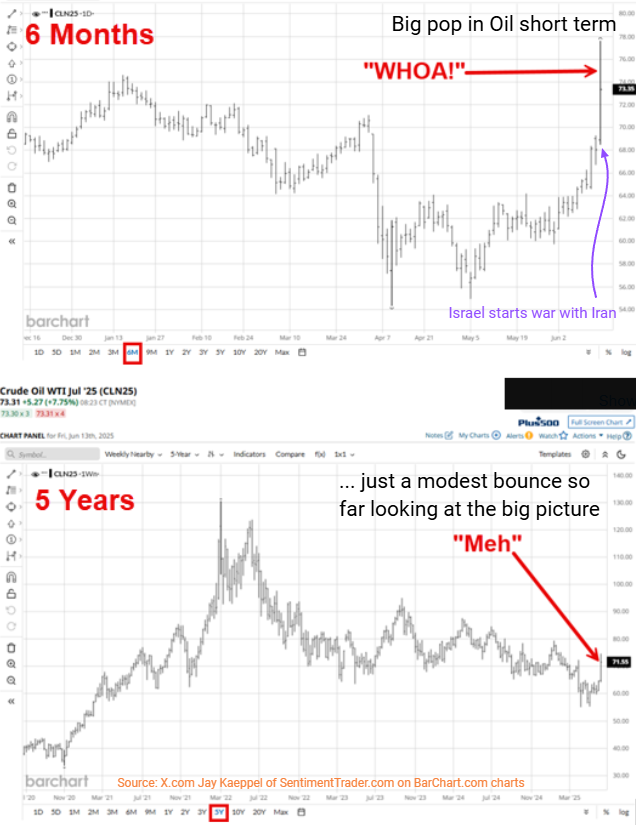
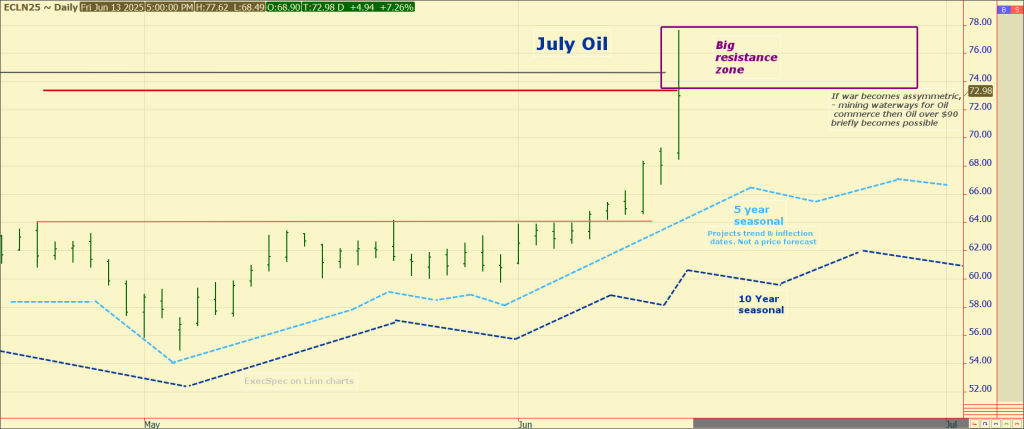
The petroleum complex had already established a modest upward trajectory in the weeks preceding Israel’s calculated strike against Iranian nuclear infrastructure. The subsequent price elevation merely confirmed what seasonal analysis had already suggested: that crude oil was entering a period conducive to momentum peaks. Absent a broader disruption to Middle Eastern commerce—that vital artery through which much of the world’s energy lifeblood flows—crude oil prices appear destined for a period of consolidation in the low-to-mid $70 range per barrel for West Texas Intermediate, while markets await clarity regarding the scope and duration of potential military escalation.
There is historical precedent to support such confidence. The Iron Dome and David’s Sling continue to intercept the vast majority of incoming threats. U.S. naval deployments in the Red Sea and Persian Gulf have, thus far, deterred Iran from executing anything beyond nuisance-level sabotage. The immediate consensus among market participants reflects a calculation as cold as a diplomatic dispatch: that Iran lacks the military capacity to prevail in any sustained confrontation with Western powers, and that any meaningful economic damage will likely be forestalled before military exchanges reach their natural conclusion. Whether this assessment proves prescient or naive remains, as always, for history to judge.
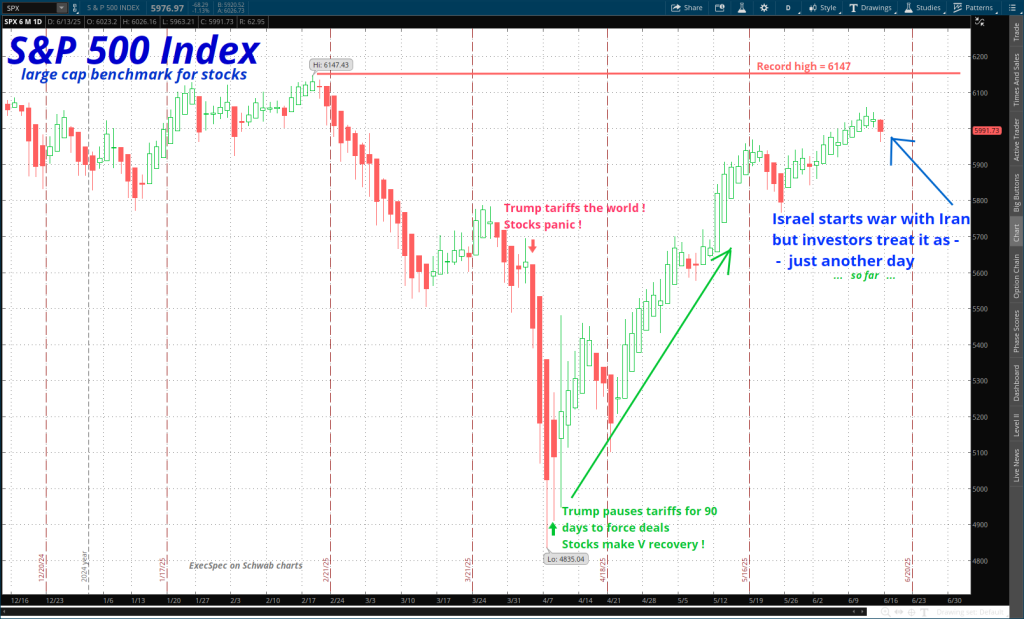
But the danger is not in what has happened—it is in what may yet unfold. The playbook now includes cyber intrusions into financial and energy infrastructure, potential asymmetric strikes against Israeli and Western assets abroad, and the specter of nuclear escalation, should Tehran deem its strategic depth under existential threat. If missile attacks prove ineffective, the risk of unconventional retaliations—such as targeted assassinations, global terror operations, or calculated nuclear brinkmanship—rises substantially. These would not merely test defense systems but investor assumptions. In such a scenario, the complacency currently priced into markets could be upended overnight, with oil and gold spiking sharply and equity markets turning abruptly lower.
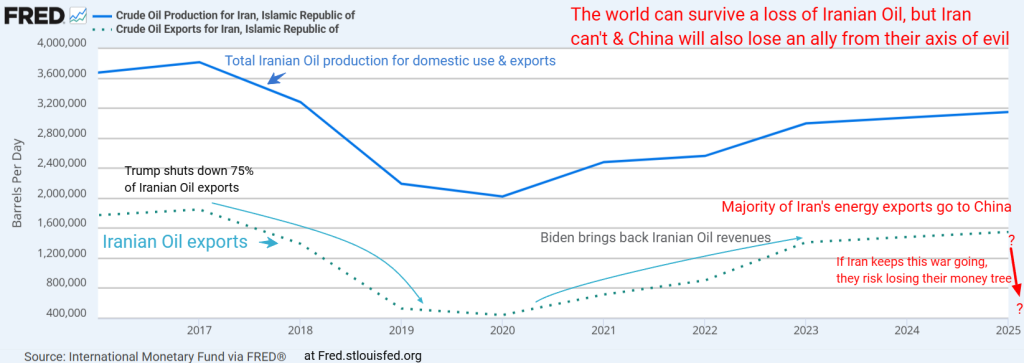
The economic implications of such a turn are not trivial. A sustained conflict, even without a decisive kinetic blow, could induce long-term uncertainty in oil futures, risk repricing in Middle Eastern sovereign debt, and capital flight from exposed sectors. Insurance premiums for Red Sea shipping have already inched upward, and one need not stretch imagination too far to envision scenarios where these costs become persistent. If the West can successfully defang Iran over the next few months after a series of escalations, then Iran risks a more permanent loss of its lifeblood of petro dollars, Russia will lose their drone supplier and China will lose an ally- perhpas adding urgency to China’s desire for acquiring Taiwan.
Yet, investors—by inclination and training—are creatures of discounting. They look past headlines toward fundamentals. And indeed, for now, fundamentals remain intact. The war that began on June 12th has not yet reached its crescendo. When it does, it may not sound like an explosion, but a quiet constriction of liquidity, an uptick in volatility, a reappraisal of geopolitical risk. The Rubicon of military engagement has been crossed. Our outlook for stocks remain Bullish, with an expected detour in the later part of the third quarter. The markets, for now, remain aloft. While the odds still favor a resolution favorable to U.S. and Israeli strategic interests, and thus to investor confidence, the path ahead remains studded with risks that merit vigilance.