
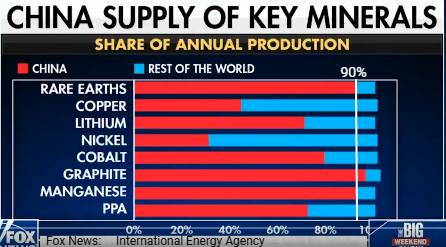
The battle for rare earth minerals, though less fantastical than the struggle for Tolkien’s Middle Earth, holds no less consequence for global dominion, with China wielding a near-monopoly that looms over the United States’ industrial and military might. This contest is a high-stakes poker game where both nations—China and the U.S.—clutch potent cards yet fear mutual ruin. China’s grip, processing 90% of the world’s rare earths and controlling 100% of 17 elements like dysprosium, is a mercantilist coup, rivaling the Middle East’s oil dominance of yesteryear. Yet, the U.S. counters with semiconductors, ethanol, food exports, and the magnetic pull of its consumer market, checking China’s leverage and averting a reckless trade war that could deeply scar both economies.
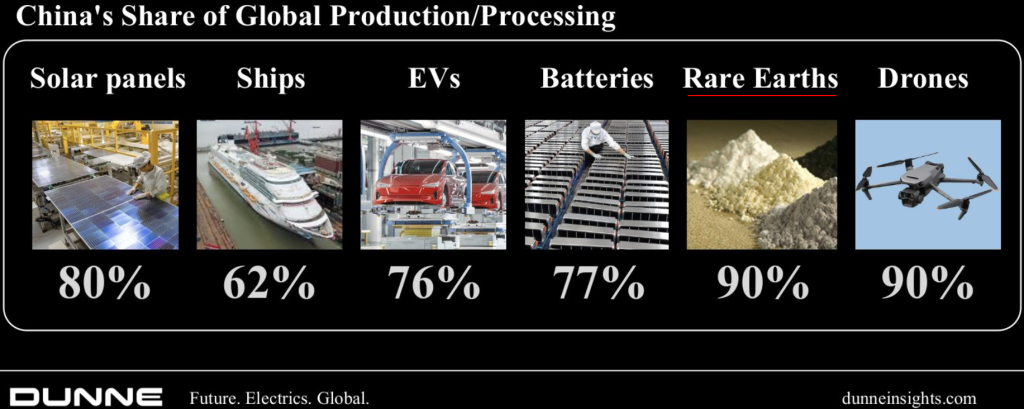
The stakes are stark. Dysprosium, vital for high-performance magnets in our most advanced F-35 jets, nuclear submarines, wind turbines, and electric vehicles (EVs), is almost entirely sourced from China, which supplies over 80% of global demand. The U.S. Defense Department requires 400 tons of Dysprosium annually, virtually all from China. Export bans by China on graphite, gallium, germanium, and five other metals critical to clean energy and defense underscore its readiness to flex this muscle. As Deng Xiaoping declared in 1992, “The Middle East has oil, China has rare earths.” While oil’s strategic clout has faded, rare earths remain a chokehold on advanced technology.
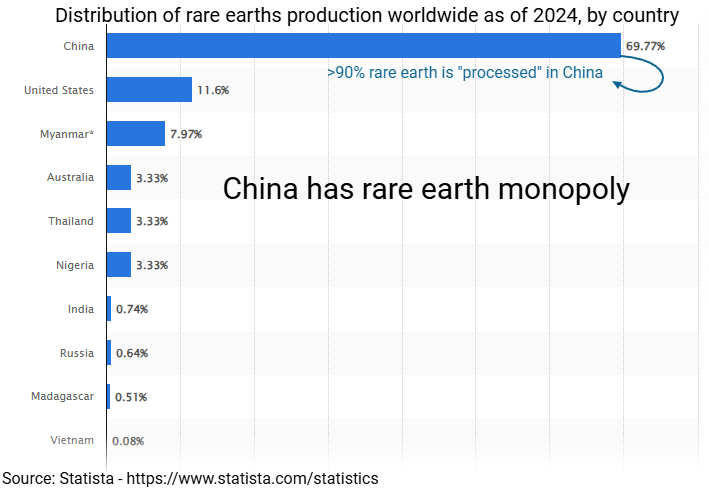
The U.S. is stirring from its decades long slumber. By 2026, new US facilities could quadruple domestic processing to 4,000–5,000 tons of rare earth oxides annually, trimming reliance on China’s refining from 98% to 90%. MP Materials, America’s rare earth vanguard, aims to scale its Mountain Pass mine (largest in the world) to 6,000 metric tons of rare earth oxides (REO) per year, a fivefold leap from today’s 1,000 tons. This could meet much of the U.S.’s 7,000-ton annual demand for neodymium-iron-boron (NdFeB) magnets, used by Tesla, General Motors, and Lockheed Martin. Yet, demand grows at 7.5% annually, and environmental regulations—often sacrosanct to the Green Lobby’s control of the EPA—have long thwarted mining expansion, should Democrats return to power. Trump’s April 2025 directive to build a strategic rare earth stockpile (currently nil), sidestepping red tape, marks a pragmatic pivot, prioritizing security over bureaucratic quagmire.
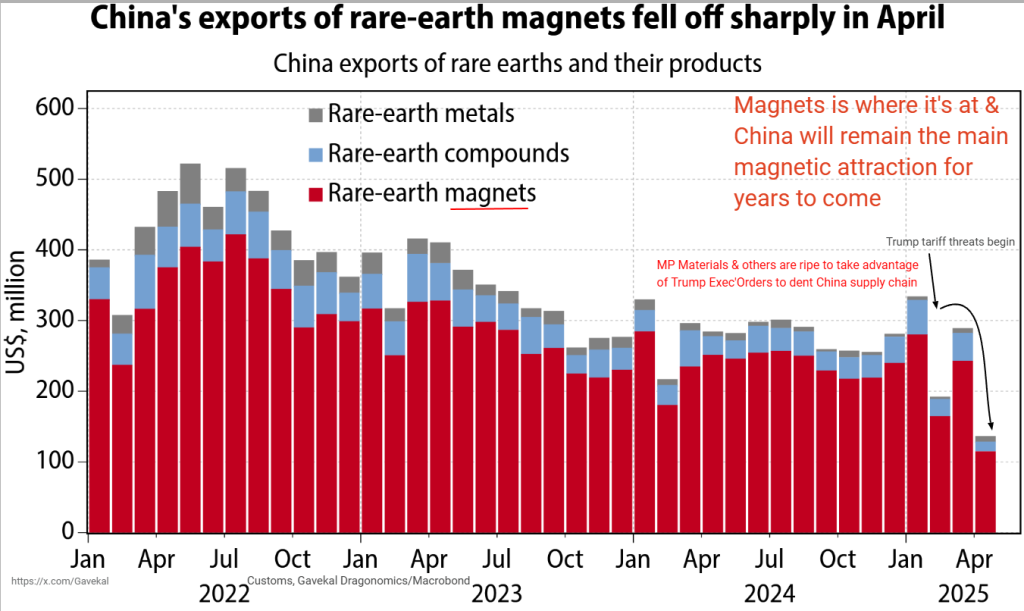
Investors stand to profit from this shift. MP Materials, nearly doubling in stock price in three weeks, and the Rare Earth/Strategic Metals ETF (REMX) are primed to capitalize on government stockpiling subsidies and pro-mining policies. The recent U.S.-China trade framework, resetting tariffs on Chinese goods to 55% and securing a six-month resumption of magnet and rare earth exports, buys time for domestic producers to scale. This deal, though touted as a Trumpian victory, also reveals China’s vulnerabilities—its reliance on U.S. ethanol for plastics, semiconductors, and market access to sustain its labor force and forestall unrest. The U.S.’s easing of tech export curbs and openness to Chinese students signals a delicate balance, not surrender.
The path to independence remains perilous. A China-Russia alliance, controlling uranium and 17 key rare earths, could paralyze U.S. energy and defense in a conflict. The U.S. must act with Reaganite resolve, dismantling not just regulatory but geopolitical barriers. While the current focus is America First, enlisting allies like Canada and Australia, rich in rare earth deposits, to fortify a Western supply chain is critical. Investors should watch MP Materials and REMX, alongside emerging players in allied nations, where mining projects are accelerating. The VanEck Green Metals ETF (GMET), with global exposure to rare earth and critical minerals, offers diversified potential. While we have exposure in MP, 20 to 30%+ pullbacks are prudent for new investments. {Buy under 31}
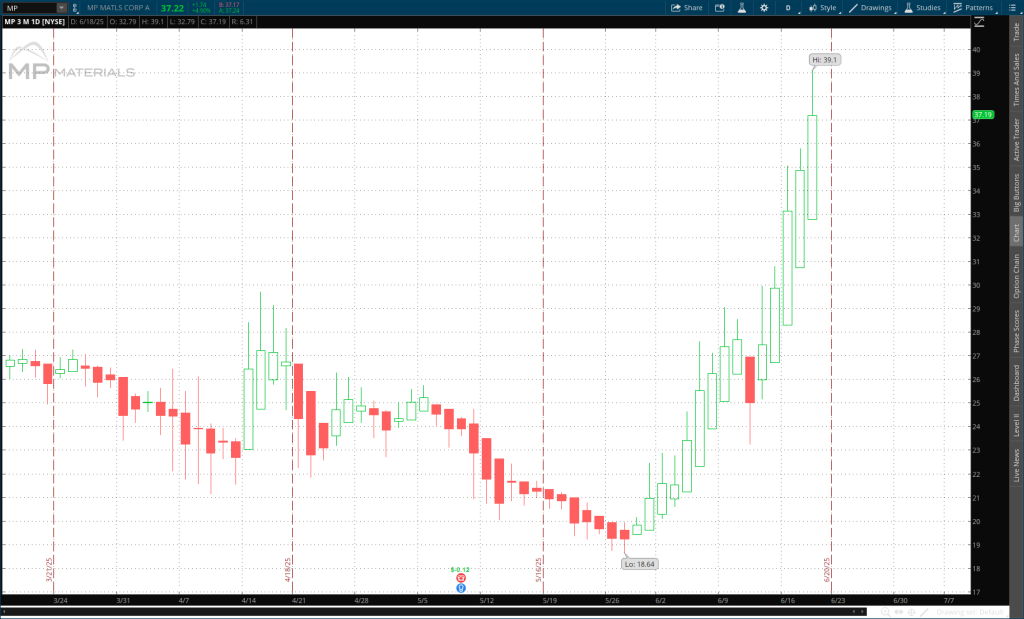
Trump may spin the new China trade deal framework as a major victory, but the evidence appears to be that China’s trade threats brought Trump to the table to offer concessions and ensure Chinese rare earth dominance for the next decade, while the US races to replace them. The eventual trade deal should shrink the trade imbalance while giving a green light for Government support of strategic industries such as rare earth (magnets). This bodes well for MP Materials in particular (and mining related companies).
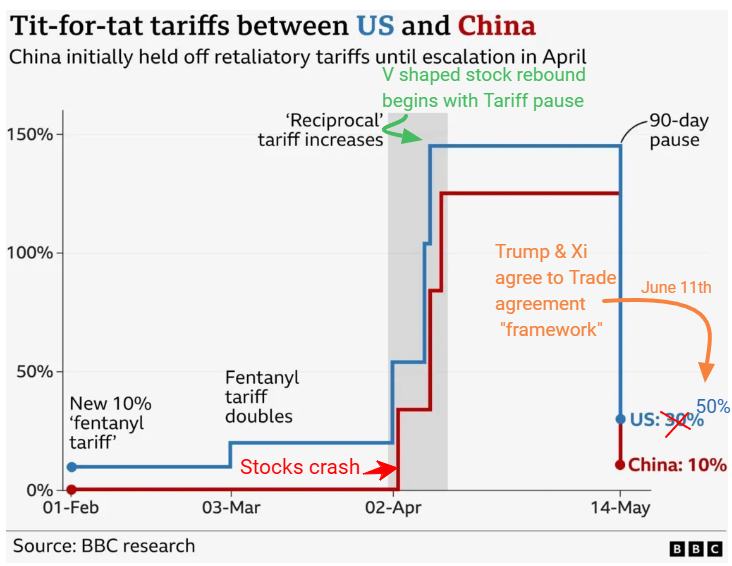
America’s rare earth quest mirrors its broader challenge: safeguarding economic vitality and strategic autonomy in a world where interdependence is both shield and shackle. For investors, the moment is ripe—government support, market momentum, and geopolitical imperatives converge to favor those betting on America’s mineral resurgence. This administrations aggressive focus on strategic independence in a deglobalizing world is a proactive effort to ensure liberty and supremacy. US rare earth stocks have miles to go before they sleep as the supply chain battle is far from won.