Our current leader—often characterized as transactional and undeniably mercurial—embodies a presidency defined by disruption rather than tradition. His recent display of aggressive threats last month, followed by an Arab diplomatic “lovefest” this week, exemplify a sui generis style: unorthodox, unpredictable, yet undeniably strategic. While critics label him reckless or capricious, they overlook the deliberate architecture of what might be called his “Art of the Deal,” where volatility masks brazen calculus.
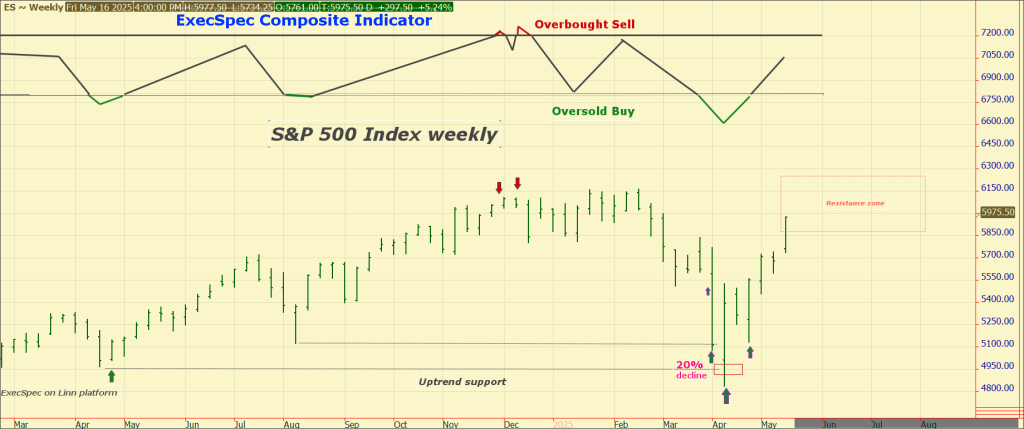
Far from caving under embarrassment, he has calibrated his trade policy as a form of economic psychological warfare. By deploying punishing tariffs—seemingly on a whim—he seeks to coerce heretofore compliant or acquiescent nations into structural adjustments. These are designed not merely for immediate gain but to position the U.S. as a negotiator of unparalleled leverage. The shockwaves from his approach were apparent when markets, unprepared for the audacity of April 2nd’s threats, plunged into what could only be termed a recessionary tailspin—dipping over 20% from February’s peak amid fears of global trade unraveling.
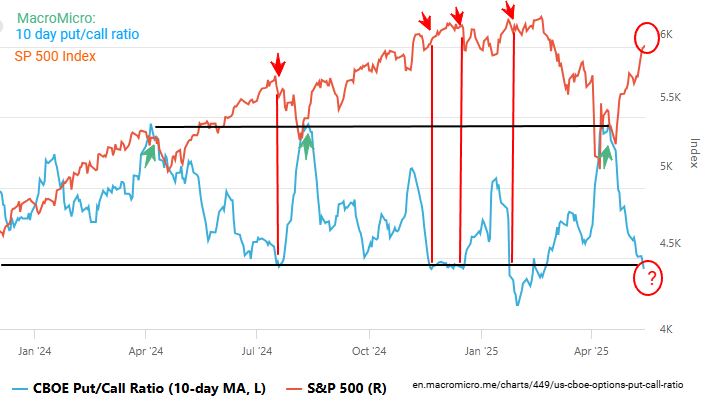
In the immediate Liberation Day aftermath, market sentiment oscillated wildly. Investor positioning, as measured by options markets and fund manager surveys, veered toward extremes—purchasing puts en masse at levels unseen since late 2023, then rapidly reversing course as optimism rebounded. Such swings, while seemingly irrational, are emblematic of a market that perceives the current climate as both perilous and opportunistic.
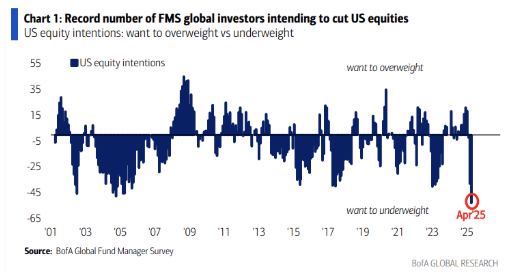
BofA’s Global Fund Manager survey of intent to sell stock had reached a record degree of pessimism in April. This is typically a good time for long-term investors to add to their portfolio.
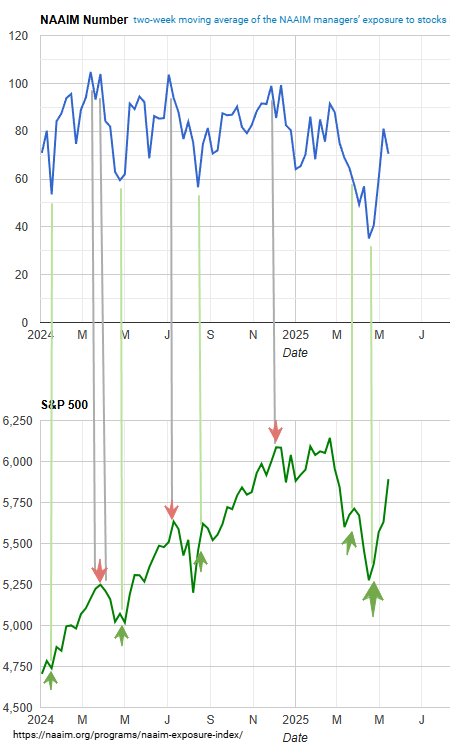
Money Manager’s leveraged exposure to stocks according to NAAIM had also reached multi-year levels of Bearish posturing due to record unpredictability of the Trump tariffs. When money managers reduce their confidence to the extremes of mid-April, it’s often a suitable time for investors to become less Bearish.
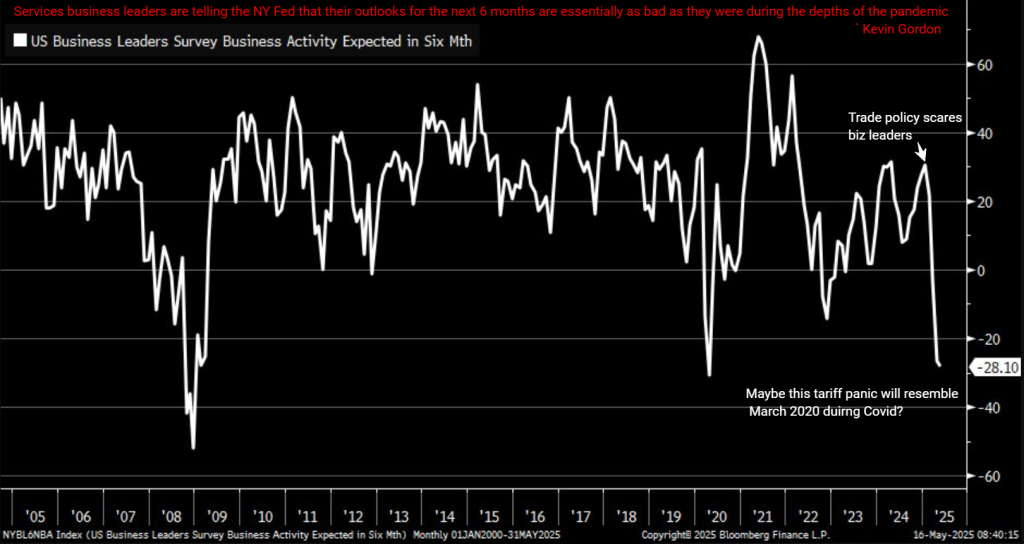
The critical question remains: does this turbulent détente signal an impending dawn or a perilous dusk? The 90-day lull in tariffs provides a temporary veneer of certainty. Yet, absent substantive agreements with key players such as Europe, China, and Canada, the risk of escalation remains acute, threatening a recessionary trigger that could push markets to multi-year lows. How much risk are trade partners willing to bear in test of President Trump’s strategic thresholds? What choice do they realistically have?
Evidence suggests that many nations, already committed to expansive manufacturing investments in the U.S., are unlikely to risk antagonizing a leader whose tactics include reciprocity and strategic tariffs aimed at fostering American self-sufficiency. Capital investments according to inrependent sources already surpass $4 trillion with billions more in purchasing orders.
If history offers guidance, then even in the absence of fully realized tariffs, inflationary pressures—persisting into late summer—will challenge earnings and valuations. Yet, markets tend to look past the immediate. As trade deal frameworks solidify, and capital continues to flow into the U.S., the consensus could shift from caution to cautious optimism. By the time an economic “all-clear” emerges, the market could inflate well beyond its previous records, setting the stage for a meaningful correction once realities reassert themselves.
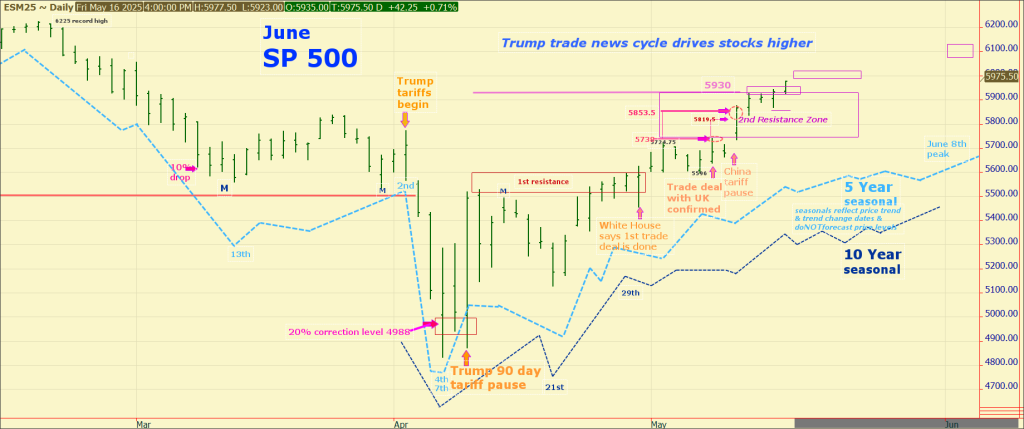
The current rally, driven by diplomatic spin and strategic postponements, might be dismissed as “Trump’s pivot.” But it’s more accurately described as a high-stakes Texas Hold’em game—an artful bluff blending bravado with calculation. Our prior April 2nd interview insights, based on impeccable models, suggested that stocks were poised to advance over the next two months—an outlook confirmed by the recent 25% market rebound and Trump’s tour de force through Arab capitals this week, where political goodwill and corporate commitments have pushed indices within a few percent of all-time highs. Arab states promised over $2 trillion of investment into the US along with securing hundreds of billions in new orders for planes, chips and military hardware.
In sum, skepticism remains high, but so does the potential for further gains over the next year. The S&P, in its Pavlovian ascent over the past 5 weeks, eyes the psychological barriers of 6,000, and all time highs near 6147 with only moderate perturbations predicted before there is risk of the tariff détente becoming an illusion suspended by time and tweets. The possible downside—5 to 10%—may serve as a garden-variety summer correction amidst an otherwise bullish landscape. Use 2 to 4 day pullbacks in the general market to look entry points on the long side.
In essence: The Trump trade—like all grand gambits—carries both peril and promise. Its future hinges less on tariffs and more on the bluffs, calculations, and commitments of an unpredictable chess player in the deal making arena where uncertainty reigns supreme.