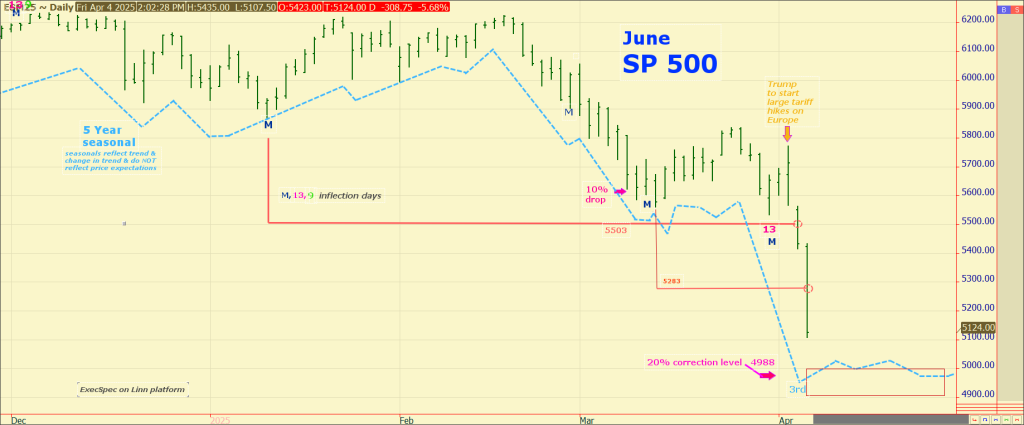
Uncertainty, that boogeyman of commerce, has descended upon the American psyche with the subtlety of a sledgehammer. Investors and entrepreneurs, those intrepid navigators of risk, recoil from ambiguity as though it were a contagion. And yet, ambiguity is precisely what President Trump has delivered in spades with his latest trade salvo—a policy as audacious as it is anachronistic, evoking the ghost of Smoot-Hawley, that ill-fated tariff regime of 1930 which turned a stock market crash into a global depression. The Trump Trade War, as it is now inelegantly dubbed, arrives on the heels of an AI-fueled bull market, a two-year golden age of prosperity that had Wall Street sipping champagne from the cup of technological optimism. Now, the chalice is spiked with the bitter draft of tariffs—rates that dwarf even those of the Depression-era fiasco if enacted—wielded as a cudgel to reshape global trade and exorcise the specter of U.S. trade deficits before his political leverage evaporates in the 2026 mid-term elections.
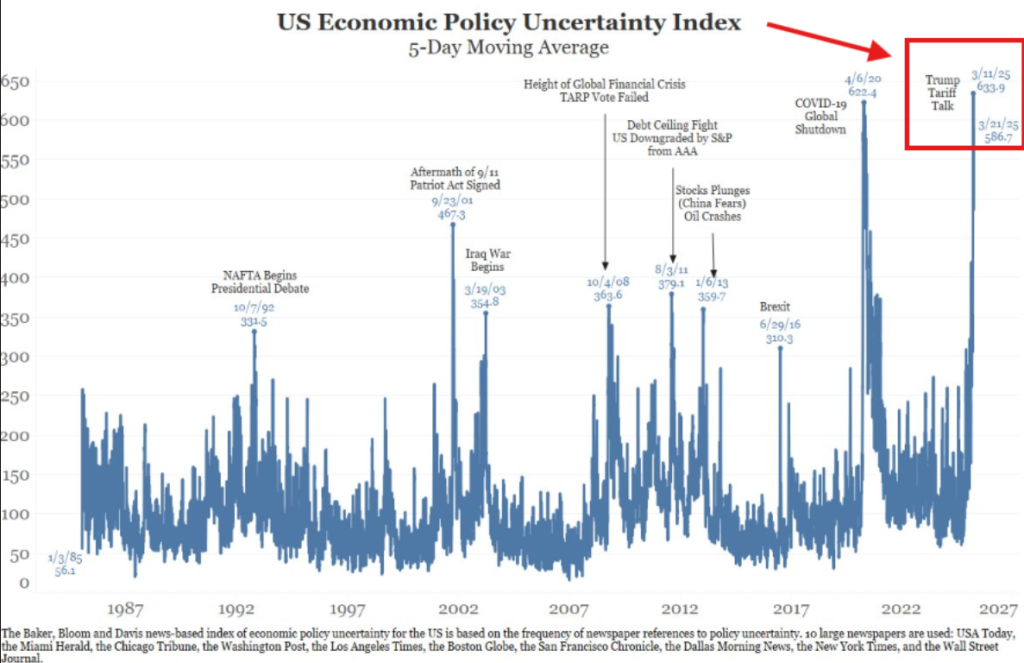
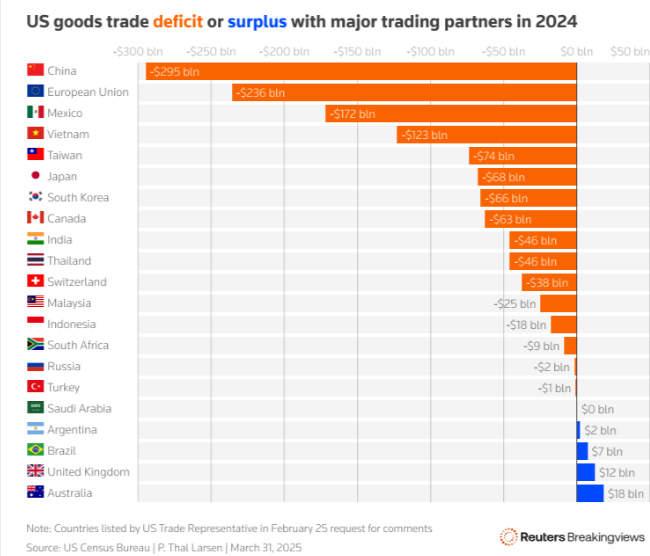
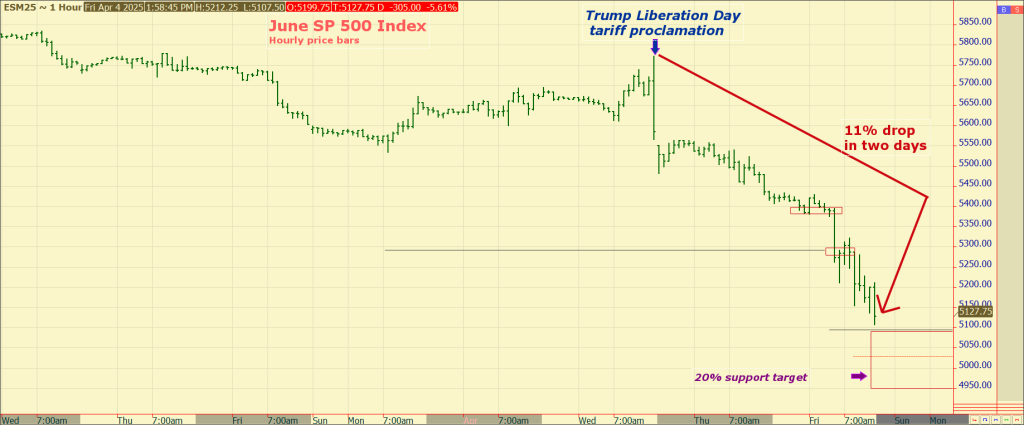
The markets, those barometers of collective sentiment, convulsed on the Liberation Day pronouncements. A 7th-largest gap-down opening in four decades greeted the news, dragging stocks to eight-month nadirs. The S&P 500, having shed 16% from its February zenith, and the Nasdaq, down 22%, reflect a panic that transcends the routine 10% correction of mid-March—a dip investors had shrugged off as a salutary breather. But April 2nd’s revelation of tariffs exceeding even the most fevered expectations, coupled with threats of retaliation from trading partners, ignited a 2-day 10% plunge across indices as investors fear a protracted Trade War. Vietnam, the nation with our fourth-largest trade deficit, offers a flicker of hope today, signaling a willingness to parley away barriers. Yet this olive branch is overshadowed by the specter of European reprisals, which loom like storm clouds on the horizon.
Unlike COVID, Trump’s toolkit lacks the finesse of monetary or fiscal levers. The Federal Reserve, chastened by past profligacy, will not unleash quantitative easing until unemployment spikes—an eventuality lagging the tariff rollout. Congress, riven by partisan rancor, is unlikely to muster fiscal stimulus or reverse the policy absent a bipartisan mutiny, a wild card growing plausible as Republican dissenters join Democrats in dismay. For now, the labor market hums along, oblivious to the gathering tempest, but sentiment—soft data like GDP and CFO projections—have cratered. CFOs, 95% of whom decry trade uncertainty, brace for a deluge of downgraded earnings when Q1 reports emerge later this month.
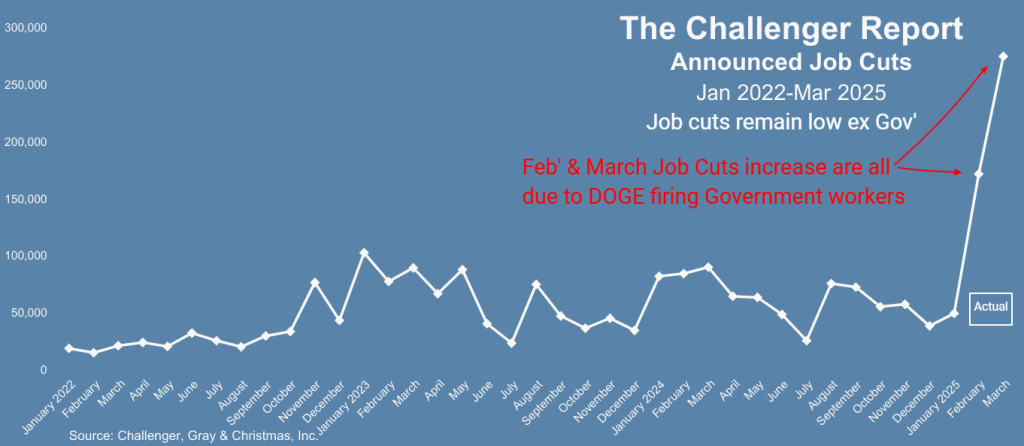
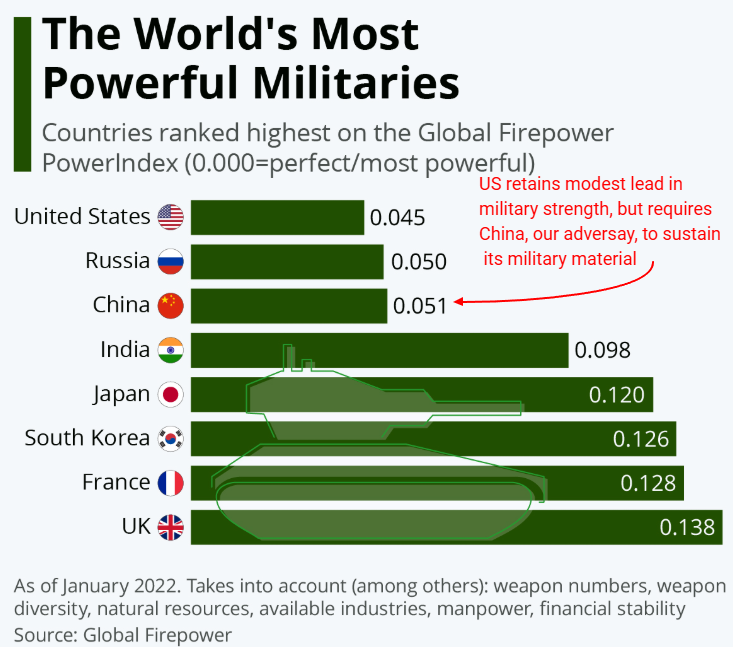
The analogy to past crises is imperfect but instructive. The COVID collapse of 2020 and the mortgage meltdown of 2008 are the most recent cautionary tales. Todays crisis and the COVID lockdown were both self-inflicted wounds. Unlike 2020, no helicopter drops of stimulus checks will rain down; unlike 2008, when optimists foresaw a soft landing for the housing bubble, today’s uncertainty is a hydra-headed beast. Trump’s tariff calculus, masquerading as reciprocity, seeks to balance bilateral trade flows with the precision of an ancient alchemist—40-to-90% duties slapped on impoverished exporters who neither need nor can afford our Teslas and Nvidia chips. US trading partners do not play fair, but this policy is not about fairness; it is a quixotic quest to erase deficits with a formula as capricious as it is unattainable, given America’s insatiable consumption. In an era of unraveling globalism, where adversaries flex their martial muscle with a vigor that outpaces our own, safeguarding domestic industries and securing the sinews of survival—strategic materials—rises to an urgent necessity as technological warfare grows exponentially.
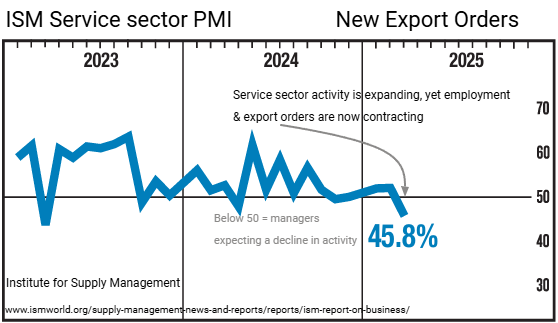
While our economy has been slowing, the hard data has only shown moderate deterioration, thus far. The soft data of sentiment and projected GDP has fallen precipitously, so we would expect a significant lowering of forward earnings and revenue guidance when first quarter earnings start flooding out later this month. Once investors stop selling as if the sky were falling and react without panic to earnings disappointments or escalatory tariff tiffs, then we will be near a major stock market bottom. For now, the hard data is healthy, in sharp contrast with expectations. However, the all important service sector is wobbling due to consumer uncertainty over trade. We expect this to weaken further in April and May.
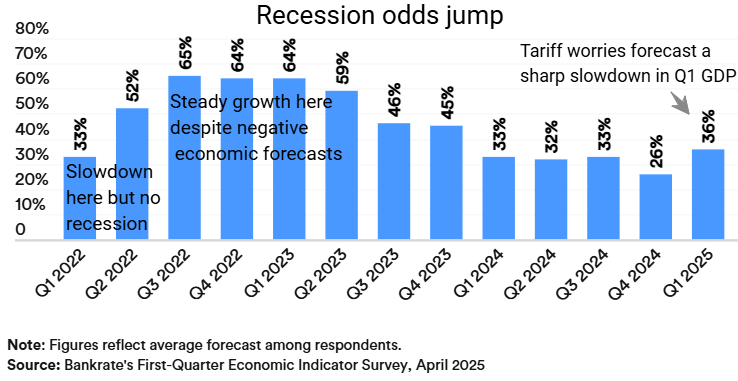
A respite may yet emerge. Oversold technicals hint at a rally if trade talks pivot from escalation to détente. But the downtrend since February, a hybrid of 2020’s panic and 2008’s slow bleed, suggests deeper peril unless clarity dawns—via negotiation or congressional intervention. Economists now peg recession odds at 36%, up from 26%; JPMorgan hoists its estimate to 60%. Forecasts are often uncorrelated with reality, but a consensus that we share is that a brief trade war ending this month would not be a problem, but an escalating trade war continuing into the back half of 2025 would spell trouble. Hard data—jobs, services—remains sturdy, but consumer dread of price shocks in cars, electronics and travel could be on the cusp of an economic cascade: bloated inventories, layoffs, contraction. Consumer behavior as tariff price hikes on domestically produced goods manifest over the next month will be instructive.
Normally current pessimistic extreme conditions favor a technical rebound over the next couple of months, but rallies will remain subdued until the storm clouds of trade begin to clear. The S&P 500’s next ledge lies below 5,000, a 20% tumble from its peak. Should the trade war abate, a handshake could propel markets to new heights in 2026. Until then, uncertainty reigns and the more defensive posture we adopted in February will endure.