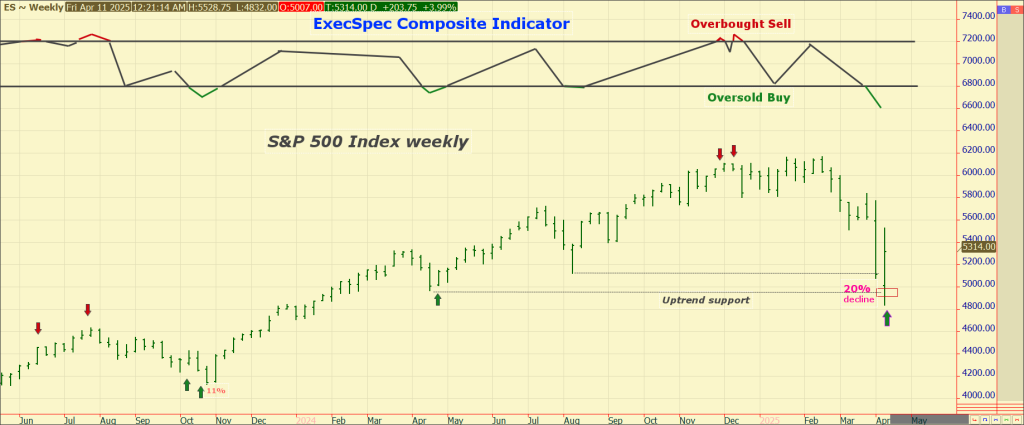
In the annals of American economic policy, few gambits have rivaled the audacity of President Trump’s tariff offensive, and the high-stakes poker of modern geopolitics. With a flourish of rhetoric at his second inauguration that most felt was replete with hyperbole, Trump pledged to exact a toll on the world’s exporters for the privilege of accessing America’s prodigious consumer market. The President reminded us that there will be “transition costs and transition porblems” stemming from his tariffs. The warning was clear: there will be blood—metaphorically, in the form of economic disruption; perhaps literally, in the erosion of global comity. Yet, as the president’s tariff threats have metastasized into policy, the nation finds itself perched on a precipice, gazing into the abyss of recessionary uncertainty or the deal of the century and a Golden Age.
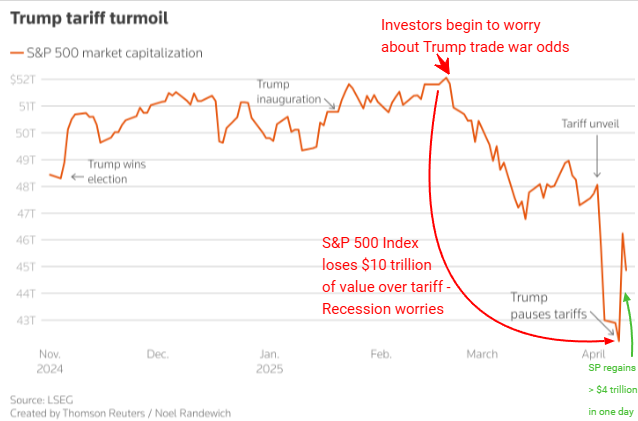
Trump’s strategy appears to oscillate between the calculated brinkmanship of his Art of the Deal and a more visceral recklessness, a kind of gut-driven diplomacy that scorns the actuarial caution of economists. The market, ever the barometer of collective sentiment, has responded with a convulsion. The S&P 500, that barometer of American commerce, soared to a $50 trillion valuation in February, only to shed $10 trillion as Trump’s tariff saber-rattling intensified. Investors, once sanguine about a second Trump term, now resemble revivalists seeking signs of salvation amid the chaos.
The president’s recent 90-day pause on the most draconian tariff rates—a policy put option, as it were—sparked a market rally of 9% in a single day, the most robust since the dark days of 2008. Some $4 trillion in losses were clawed back, a fleeting reprieve that recalls the doomed exuberance of the Roaring Twenties before the Crash. History whispers a caution: such vertiginous single-day gains often herald not a new bull market but a bear’s brief hibernation.
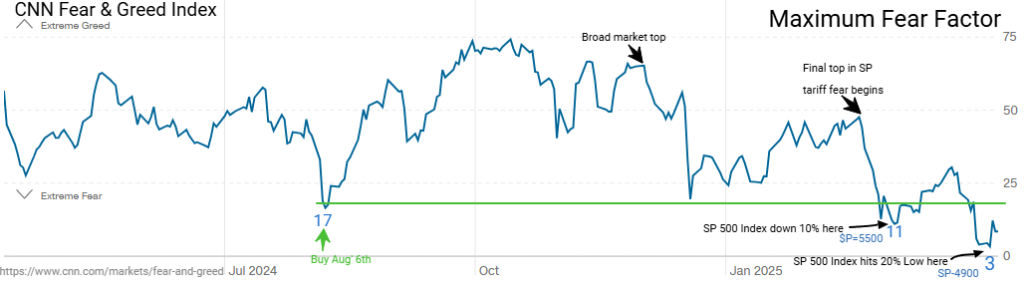
The technical indicators, however, tell a different tale. The CNN Fear and Greed Index, plumbing depths unseen since the 2020 pandemic nadir, suggests a market ripe for rebound that has more staying power than a new years resolution to hit the gym. Consumer confidence, buoyant at the prospect of “Trump 2.0,” has cratered into a 12-year low, yet the weight of evidence—breadth, sentiment, momentum—tilts toward recovery, provided the tariff storm abates.
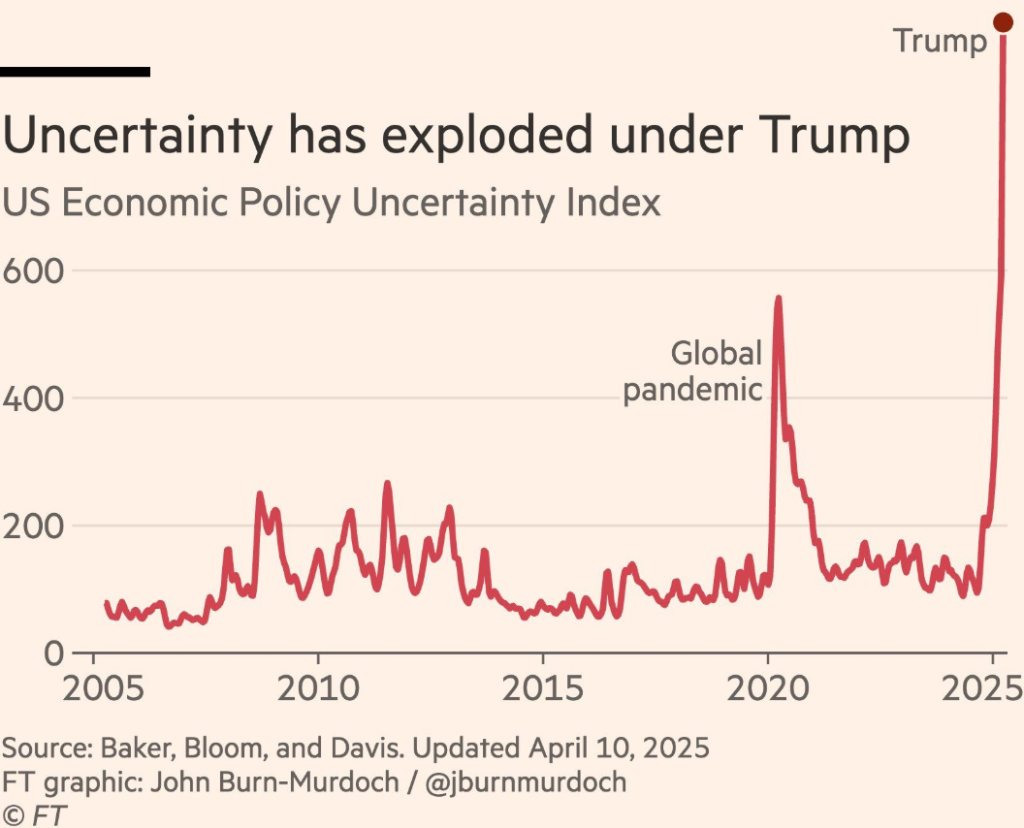
Abate it must, for the Uncertainty Index reigns as the only bull market beyond gold. The specter of recession, once dismissed by corporate chieftains, now looms large. In the fourth quarter of 2024, a mere 7% of CFOs foresaw economic contraction in 2025; by late March, that figure had swelled to 60%, a grim consensus hardened by Trump’s escalation with China. Ninety percent of these financial stewards warn of an inflationary spike, a prophecy already half-fulfilled as tariffs of 10% on global trade, 25% on auto parts, and a staggering 145% on Chinese goods disrupt the sinews of America’s supply chain. The president’s April 9 pause for 90 days, a bushel of carrots after weeks of sticks, offers a glimmer of reprieve, yet the underlying tariffs remain—a sword of Damocles over markets and consumers alike.
Will investors wager on equities under such a regime? Will CEOs, staring down surging prices and tightening consumer belts, commit capital to expansion? The current hope rests on the 75 nations reportedly queuing to negotiate trade deals with Trump. Should these pacts materialize, leveraging a grand compromise with China, the summer could herald a flood of capital investment pledges and a restoration of market optimism. Yet hope is not a strategy, and the present reality is one of fraying patience. Eight weeks of rising fear have left the polity and the markets yearning for calm, weary of the tariff tempest.
We did advise holding higher than normal cash in this period while using the decline into the 4900s S&P to add bargain stocks to the portfolio. The market’s 20-30% decline has already priced in a significant slowdown, perhaps a mild recession—a bargain hunter’s paradise for the intrepid. But if China and Europe, those twin pillars of global trade, choose defiance over rapprochment, the economic toll could be severe. Forward earnings estimates, once a rosy $280 per share for the S&P 500 with a 22 multiple in 2025, now teeter at $250-$260 with falling multiples. In a worst-case scenario—an entrenched trade war—the index could plumb depths of 3400 to 4400, a range that, while not our base case, serves as a sobering caveat. America holds formidable leverage over China’s export-driven economy, which craves U.S. consumers and capital markets. Yet rationality, that quaint Enlightenment virtue, seems in short supply amid the current political fervor. Treasury Secretary’s comment today that he would consider delisting Chinese companies from our stock exchange would be premature and a major escalation that he should refrain from suggesting in public at this time.
Still, optimism flickers. We anticipate a cascade of trade deals through spring and summer, with major partners such as South Korea, Japan and Vietnam announcing agreements in May. These pacts could lift stocks toward the S&P 5600s to 5700s, buoyed by a borderline recession—modestly higher unemployment, but not the cataclysm of a deep recession and a sub-4000 S&P. The pause on extreme tariffs, while welcome, will not arrest the softening of GDP or the erosion of corporate earnings. Trump’s tariff legacy, like that of Smoot-Hawley in 1930, risks becoming a cautionary tale of hubris, unless his dealmaking prowess delivers a finale worthy of his bravado.