
In the half-century since the United States abandoned the gold standard, that lustrous metal has stood as a bulwark against financial tempests. Conventional wisdom ties gold’s price surges to erratic inflation or an obese money supply, yet its truest dance partner remains the inverse of the U.S. dollar’s value. Today, a new specter looms: the threat of tariffs on gold imports, which has unleashed a frenetic repositioning of the metal from the vaunted vaults of London and the Swiss to the premiere repositories of New York. This shift, driven by U.S. banks, investors, and sovereign wealth funds, reflects not merely a logistical maneuver but a profound recalibration of global economic priorities.
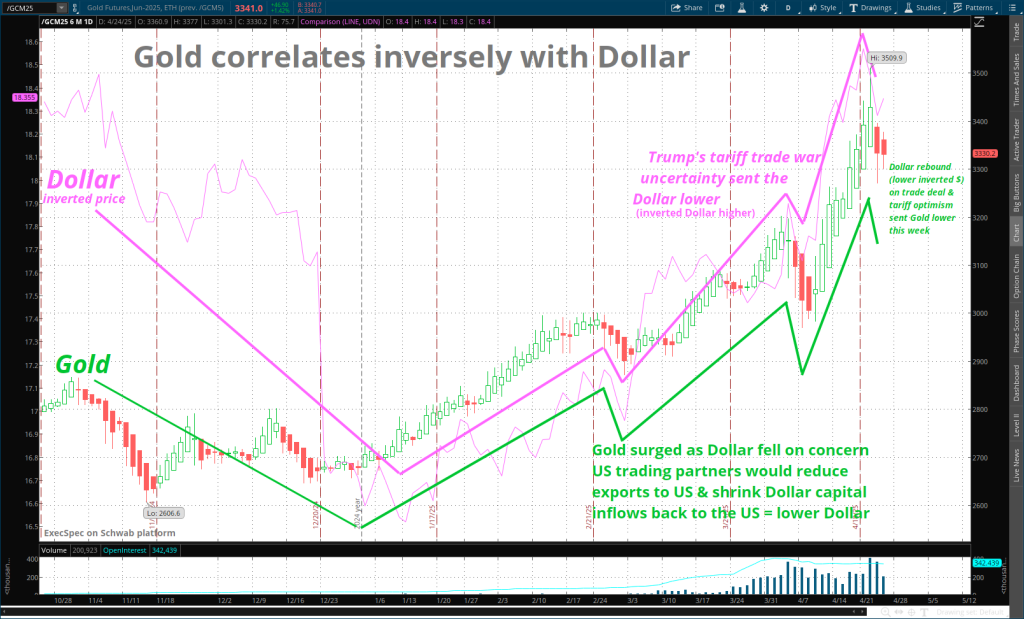
Since December 2024, over 636 metric tons of gold—valued at $60 billion—have flowed into New York’s Commodity Exchange vaults, a 116% surge that has swollen NY Comex gold stocks to 38 million ounces. The World Gold Council describes this as a “huge sucking sound,” as the United States preemptively amasses gold to skirt potential tariffs, particularly those targeting Canada and Mexico, key exporters to the U.S. market. Adrian Ash of Bullion Vault notes a “glut of gold” now crowding New York’s vaults, a vivid testament to the market’s anticipation of President Trump’s trade policies intensifying.
Yet, this is no mere logistical shuffle. The specter of a sweeping tariff on all U.S. imports could choke gold’s role in financial transactions and exchange-traded fund (ETF) flows, disrupting its liquidity and utility. Conversely, a cascade of trade agreements could cool the trade war’s fever, nudging gold prices downward as tensions ease. The market teeters on this fulcrum at $3,500 gold, its fate tethered to diplomatic caprice.
The data underscores this upheaval. Swiss gold exports, a bellwether of global flows, reveal a seismic shift. In January 2025, the United States absorbed 192,933 kilograms of Swiss gold—85% of the total 225,425 kilograms exported—compared to a mere 1,592 kilograms in January 2024. This contrasts sharply with diminished flows to traditional hubs like China and Hong Kong, signaling a redirection of gold to tariff-sheltered vaults. The Comex’s engorged reserves have drained stocks from London and Switzerland, fostering a sense of scarcity that belies the metal’s physical abundance.
|
January 2025
|
December 2024
|
January 2024
|
|
|
Total trade:
|
225,425
|
123,424
|
206,971
|
|
– China
|
200
|
4,000
|
77,807
|
|
– Emirates, Arab
|
1,923
|
5,569
|
13,691
|
|
– France
|
1,413
|
1,645
|
1,135
|
|
– Germany
|
2,095
|
1,557
|
1,321
|
|
– Hong Kong
|
1,695
|
2,102
|
44,573
|
|
– India
|
1,645
|
8,975
|
14,000
|
|
– Italy
|
1,740
|
2,952
|
2,511
|
|
– Saudi Arabia
|
1,608
|
5,775
|
8,974
|
|
– Thailand
|
510
|
0
|
11,188
|
|
– United Kingdom
|
9,274
|
14,421
|
7,893
|
|
– USA
|
192,933
|
64,247
|
1,592
|
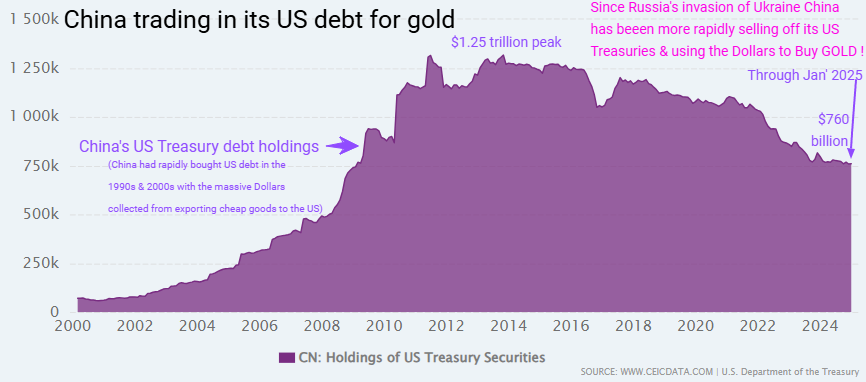
This scramble coincides with a broader geopolitical pivot. Since Russia’s 2022 invasion of Ukraine prompted the freezing of $280 billion in Russian reserves, central banks—particularly those wary of U.S. influence—have bolstered their gold holdings. China, for instance, has doubled its gold reserves since late 2022, a move less about economic prudence than strategic defiance as they reduce US Treasury debt holdings. Such actions reflect a growing distrust in dollar-denominated assets, with gold emerging as a neutral haven immune to sanctions or seizures.
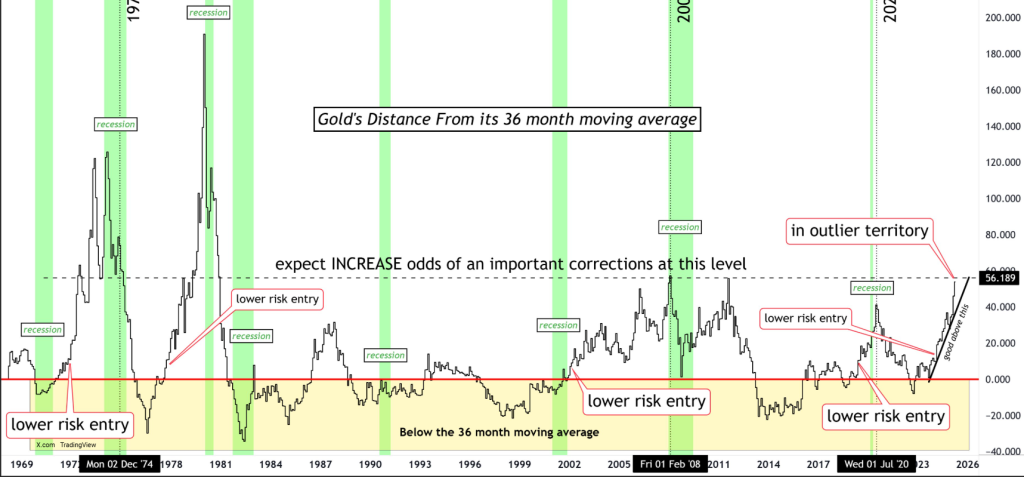
While this report just missed the release date coinciding with the recent golden peak above $3500 and the $240 sell-off a day later, the technical charts were replete with warning signs. It’s rare that gold moves this far above the gravitational pull of its 36 month moving average. With the previous two epsiodes in early 2008 and the middle of 2011, gold peaked with an ensuing decline that lasted over 8 months. The exact timing for a 2025 major top still remains in the hands of our mecurial President and his balancing of acquired leverage with mid-term election urgency factors to get trade deals done and lower the lust for golden glitter.
(The chart below does not reflect the final gold spike in April)
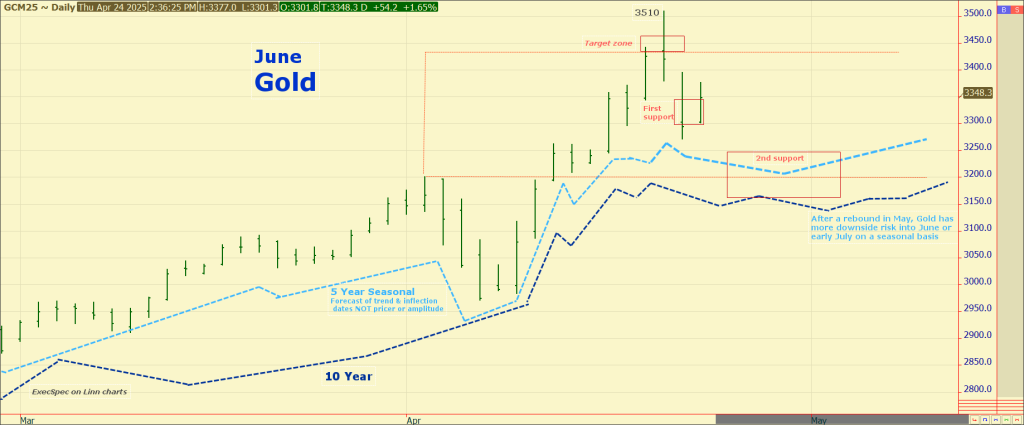
Gold punched briefly above our mid 3400’s resistance for April before softer trade rhetoric pushed the metal lower this week. At the 3510 top, traders were able to Sell 3725+ Call option strike prices to collect significant premium with a two day expiration – which was another clue that a high was near. While seasonal weakness could pressure gold a notch lower over the next couple of weeks, gold funds will use any negative trade headline to attempt another running of the Bulls back to test 3500 or higher.
The tariff rhetoric emanating from President Trump and Treasury Secretary Bessent reached a crescendo in mid-April 2025, only to soften recently with concessions that tariffs may recede and that leaders like China’s Xi are “good people” with the US open to a major reduction in tariffs. This olive branch, however, faces resistance from China and Europe, who await concessions from smaller nations before feeling compelled to engage. Should this intransigence persist, gold’s allure will endure, outpacing other metals as a hedge against dollar volatility and U.S. Treasury debt. Yet, if trade deals materialize or unemployment surges this year, the gold bull market may crest, facing downward pressure by year’s end.
In this gilded drama, gold is no mere commodity but a mirror of our era’s anxieties—reflecting fears of trade wars, dollar fragility, and geopolitical change of policy.